Hugging Face Blog
Nov 20, 2024
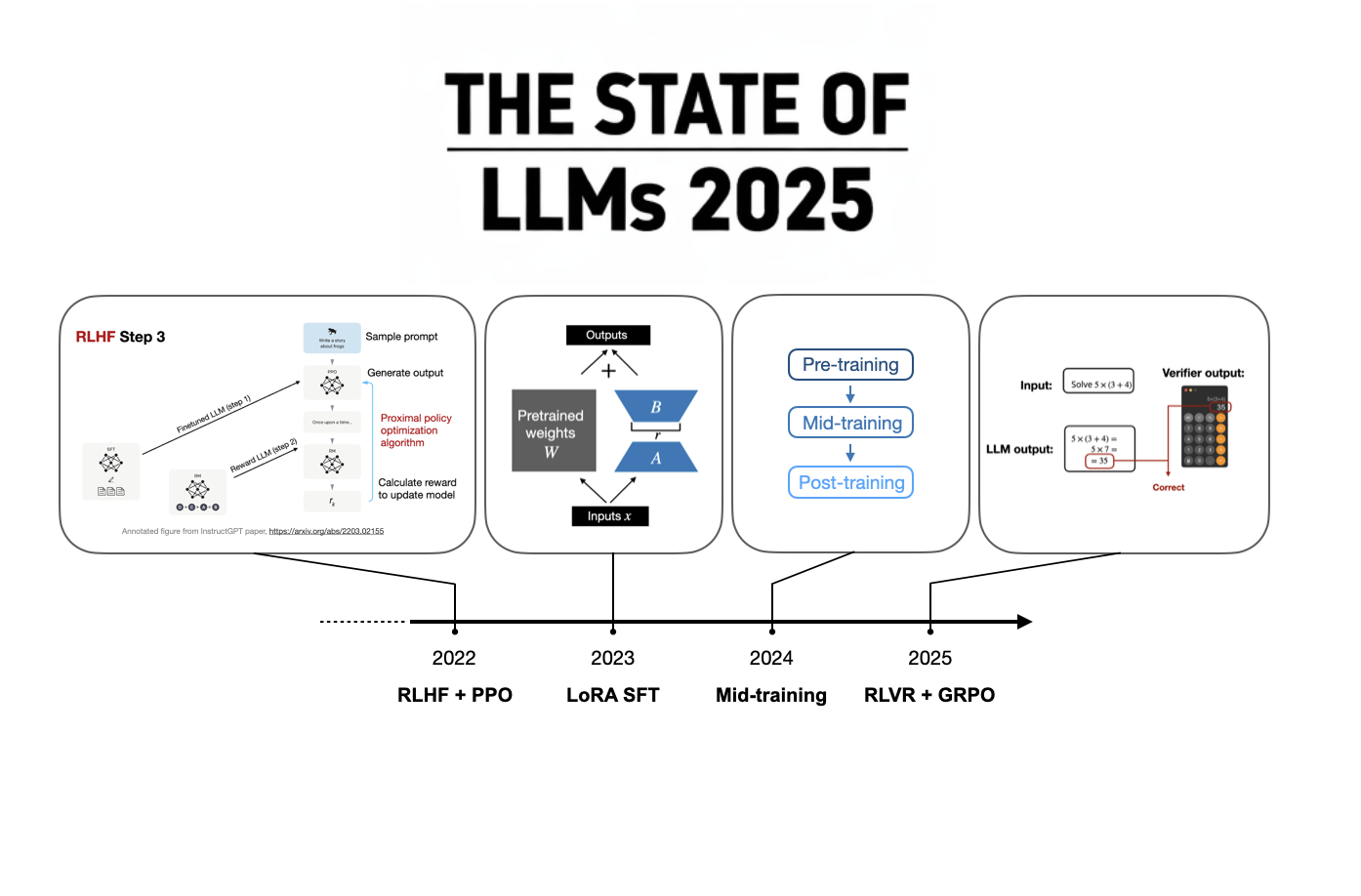
A 2025 review of large language models, from DeepSeek R1 and RLVR to inference-time scaling, benchmarks, architectures, and predictions for 2026.
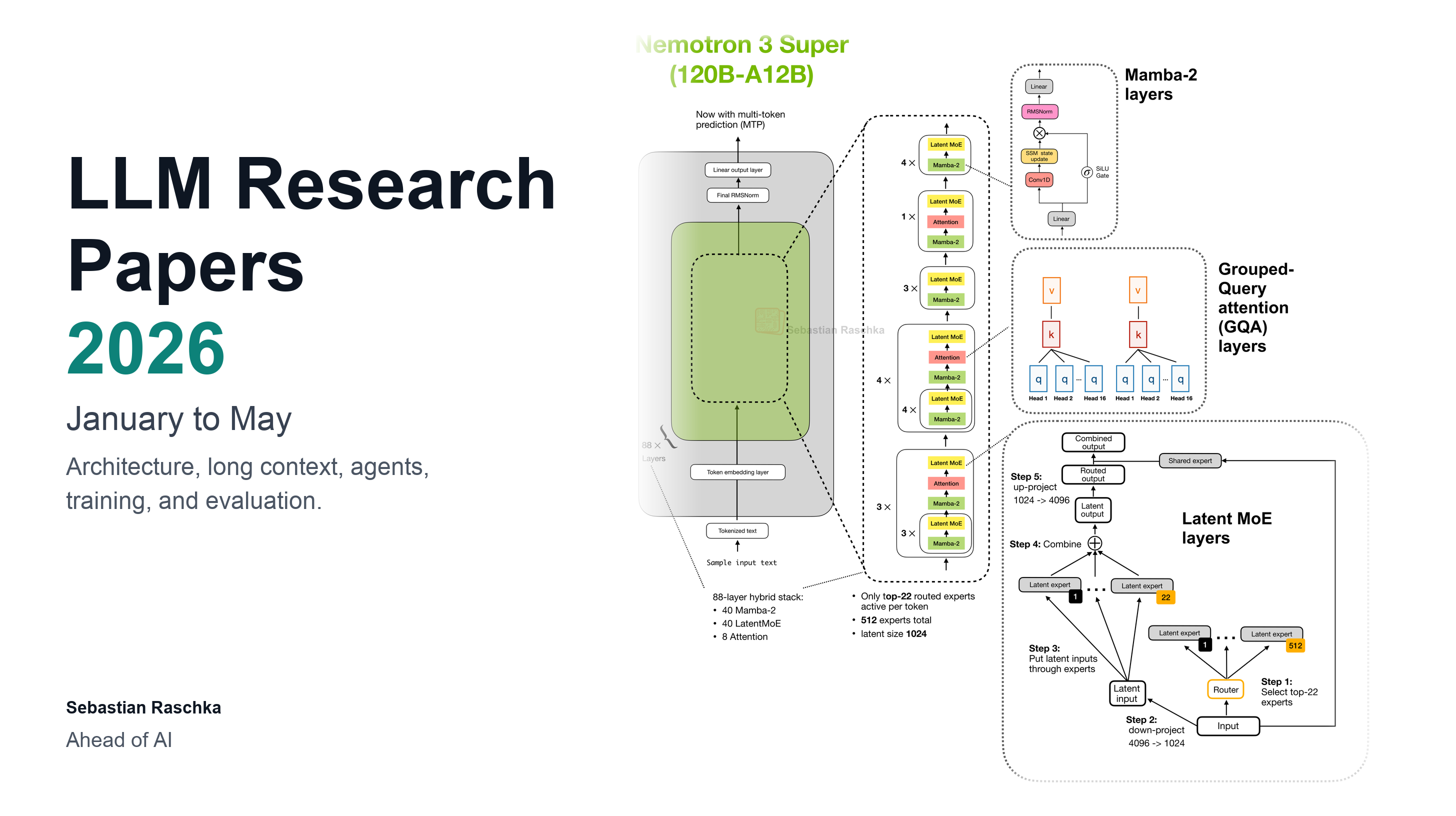
A curated roundup of notable LLM research papers that came out this year
A large language model trained on synthetic limit order book data can generate valid sequences of LOB events with near‑perfect accuracy, yet its internal world model does not capture the true state of the book. This shortfall results in biased estimates and misleading predictability when the model is used to forecast future LOB events. The study introduces new tests for an LLM’s world model, extending previous deterministic analyses to the stochastic dynamics inherent in limit order books.
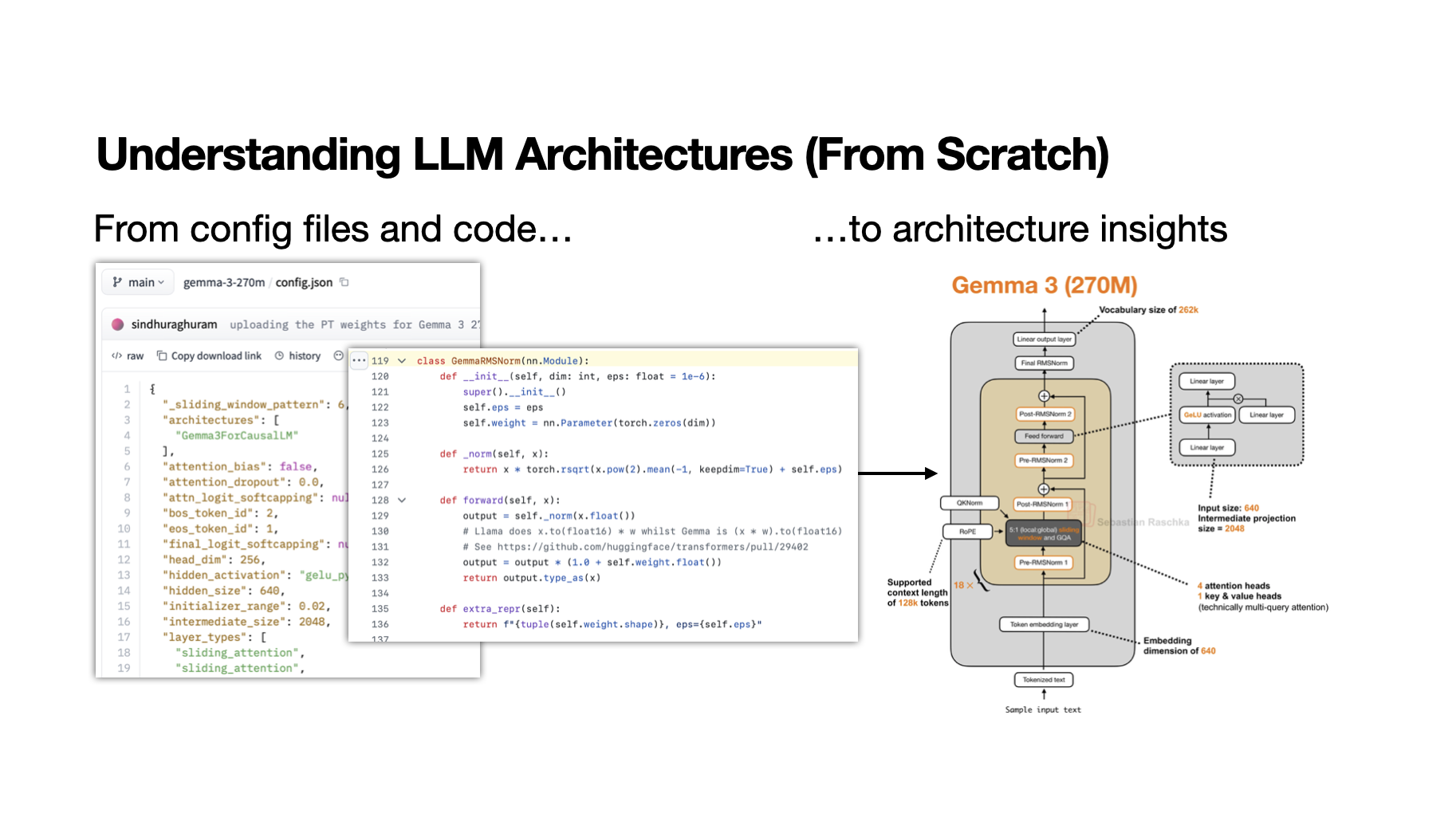
A learning-oriented workflow for understanding new open-weight model releases
arXiv:2610.16490v2 Announce Type: replace Abstract: The contention is that the current batch of Large Language Models don't *understand* language, but they *do* it. Rather than LLMs forming some kind...
A topic-organized collection of 200+ LLM research papers from 2025
The article introduces the concept of Agentic Large Language Models, which extend traditional LLMs by enabling them to act directly in the real world and interact with one another. It outlines how these agentic LLMs function, their mechanisms for action, and the implications of their capabilities for users. The discussion highlights the growing influence of LLMs on decision-making and explores the potential shifts in how we engage with AI tools.
The article discusses the rise of large language models (LLMs) and their growing influence on our decisions and actions. It explores the concept of agentic LLMs—LLMs that can act directly in the real world and interact with one another. The book aims to explain how these agentic LLMs function, their capabilities, and the implications for users.