Hugging Face Blog
Sep 10, 2025
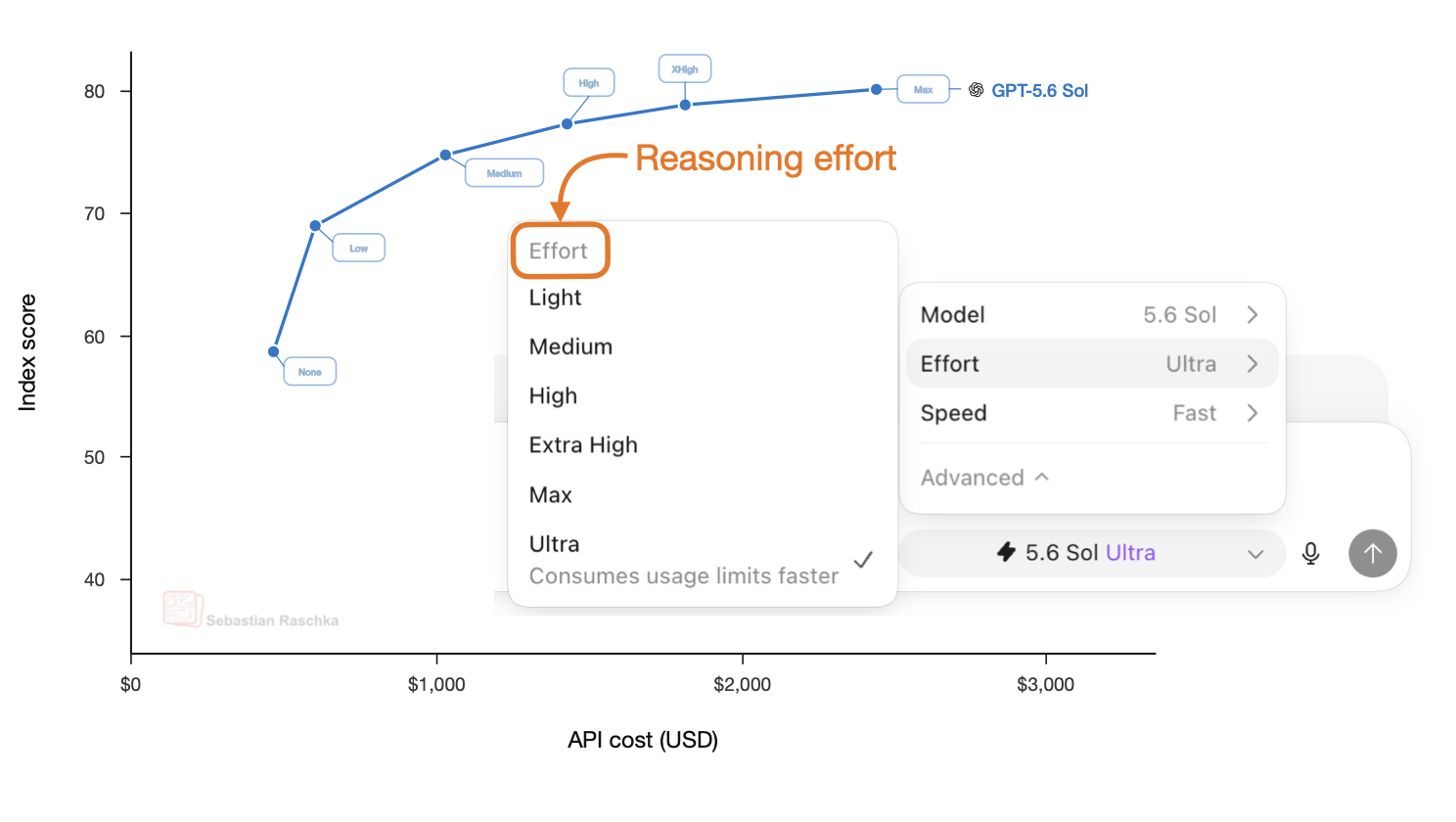
How LLMs Learn Low-, Medium-, and High-Effort Reasoning Modes
arXiv:2606. 07515v1 Announce Type: cross Abstract: We investigate the probabilistic reasoning capabilities of large language models through a controlled benchmarking study on discrete probability problems.
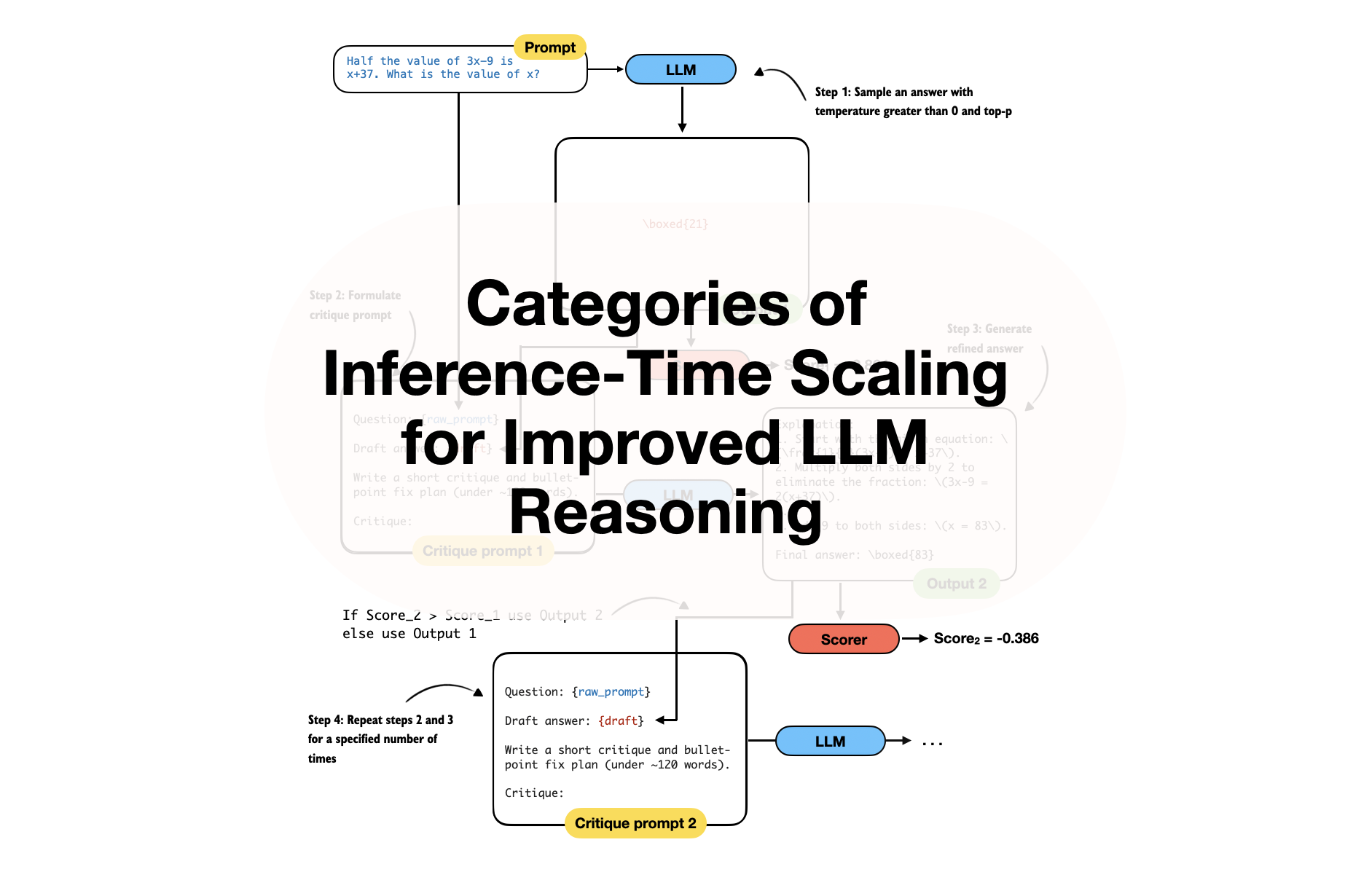
And an Overview of Recent Inference-Scaling Papers
arXiv:2505. 24069v4 Announce Type: replace-cross Abstract: Large language models (LLMs) are deployed on increasingly complex tasks that require multi-step decision-making.
The paper proposes a fragment‑based reasoning framework for large language model–based machine translation. It extracts parallel source‑target fragments from retrieved similar examples and uses these fragments as intermediate reasoning traces to generate the final translation. Experiments with the Qwen3 model across six languages and multiple domains show that this approach outperforms standard k‑shot or basic drafting methods.
The paper introduces the Structure-Internalized Rule Language Model (SIRLM) to improve Knowledge Graph Reasoning (KGR) by addressing the mismatch between KG structural context and Large Language Model (LLM) parametric knowledge. SIRLM centers on a Structure-Internalized Rule Generator (SIRG) that uses in-context learning, a structural relation memory, a KG tokenizer, and a neuro-symbolic reasoner to generate structural rules and provide faithful rule-execution feedback. Experiments on 36 datasets against 17 state‑of‑the‑art KGR methods show that SIRLM achieves significant performance gains.
arXiv:2602. 06337v2 Announce Type: replace-cross Abstract: Causal inference is essential for decision-making but remains challenging for non-experts.
arXiv:2608.30256v1 Announce Type: cross Abstract: Logical reasoning with large language models (LLMs) is a critical capability, as it reflects a system's ability to correctly deduce hypotheses from a...
arXiv:2602.02427v3 Announce Type: replace Abstract: Large Language Models (LLMs) have achieved significant breakthroughs across various domains, but they can still produce unreliable or misleading ou...
arXiv:2404.06349v3 Announce Type: replace Abstract: The ability to understand causality significantly impacts the competence of large language models (LLMs) in output explanation and counterfactual r...