Sebastian Raschka
Feb 25
A Dream of Spring for Open-Weight LLMs: 10 Architectures from Jan-Feb 2026
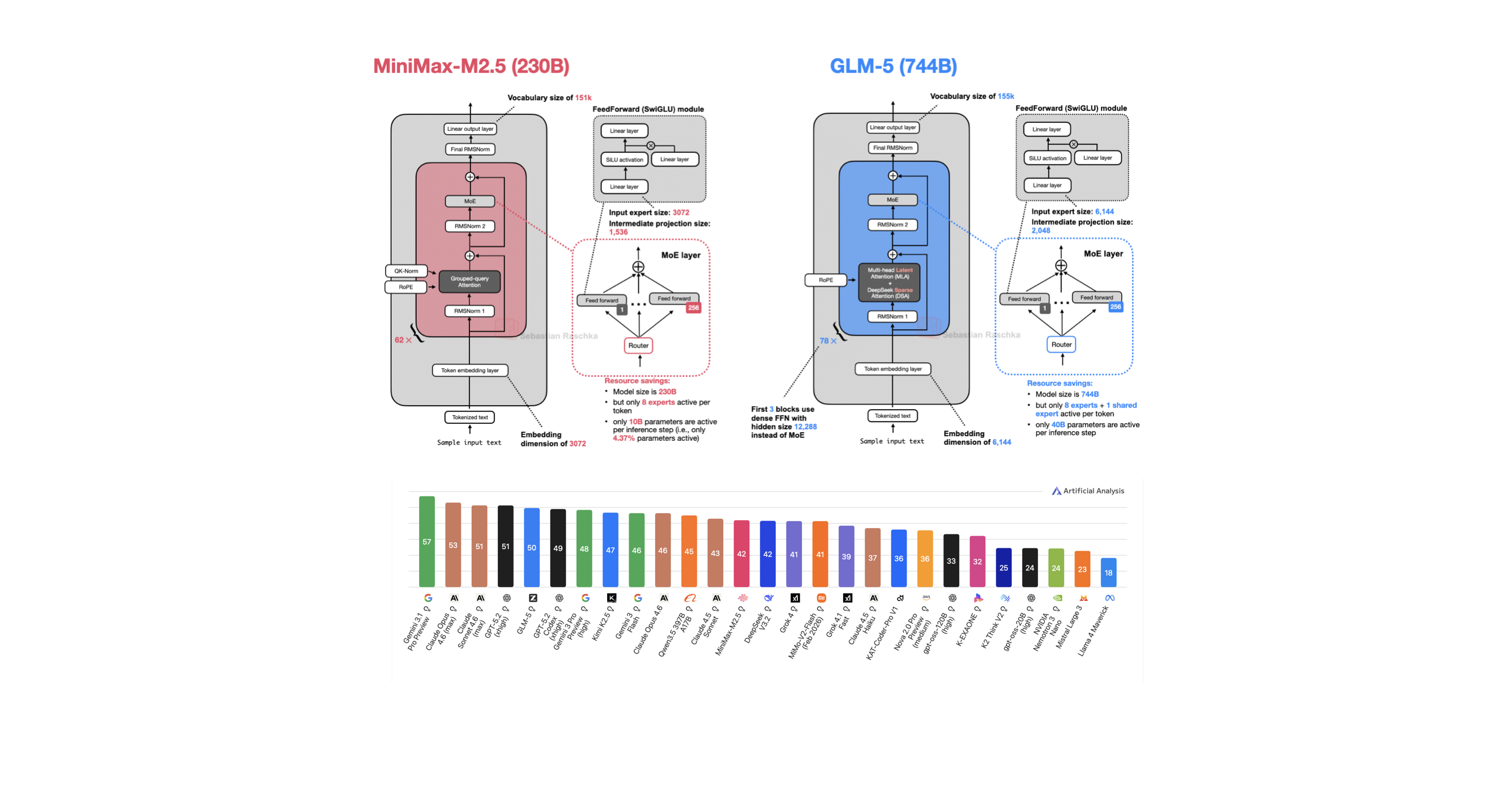
A Round Up And Comparison of 10 Open-Weight LLM Releases in Spring 2026
A learning-oriented workflow for understanding new open-weight model releases
A Round Up And Comparison of 10 Open-Weight LLM Releases in Spring 2026
If you have ever wanted to actually build an LLM inference runtime yourself — pack your own weights, own every barrier, capture your own CUDA graphs — this is what that journey looks like on an H100. A step-by-step tour of a small runtime called annotated-llm-runtime, and the three bugs that produced most of the annotations.
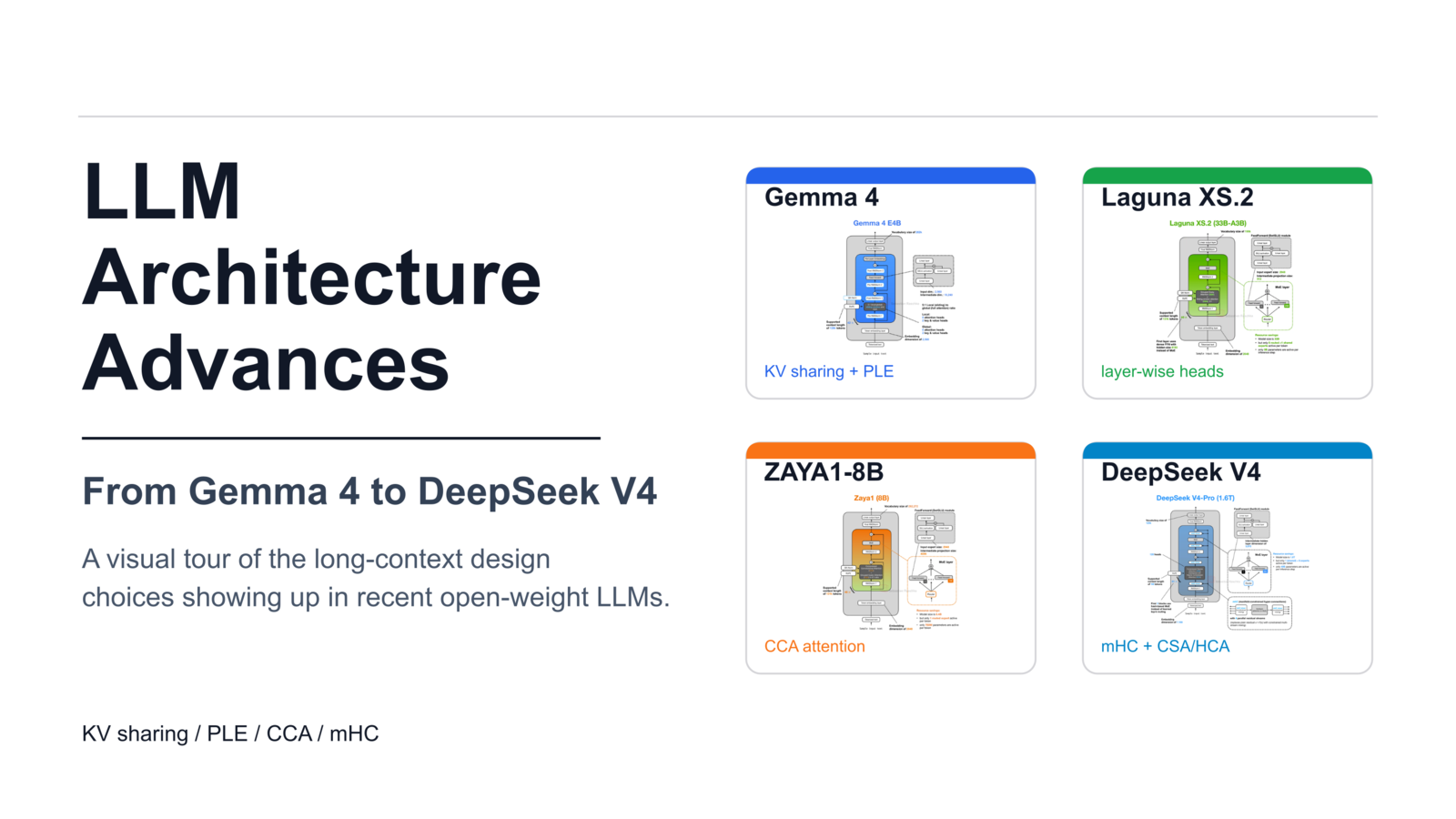
From Gemma 4 to DeepSeek V4, How New Open-Weight LLMs Are Reducing Long-Context Costs
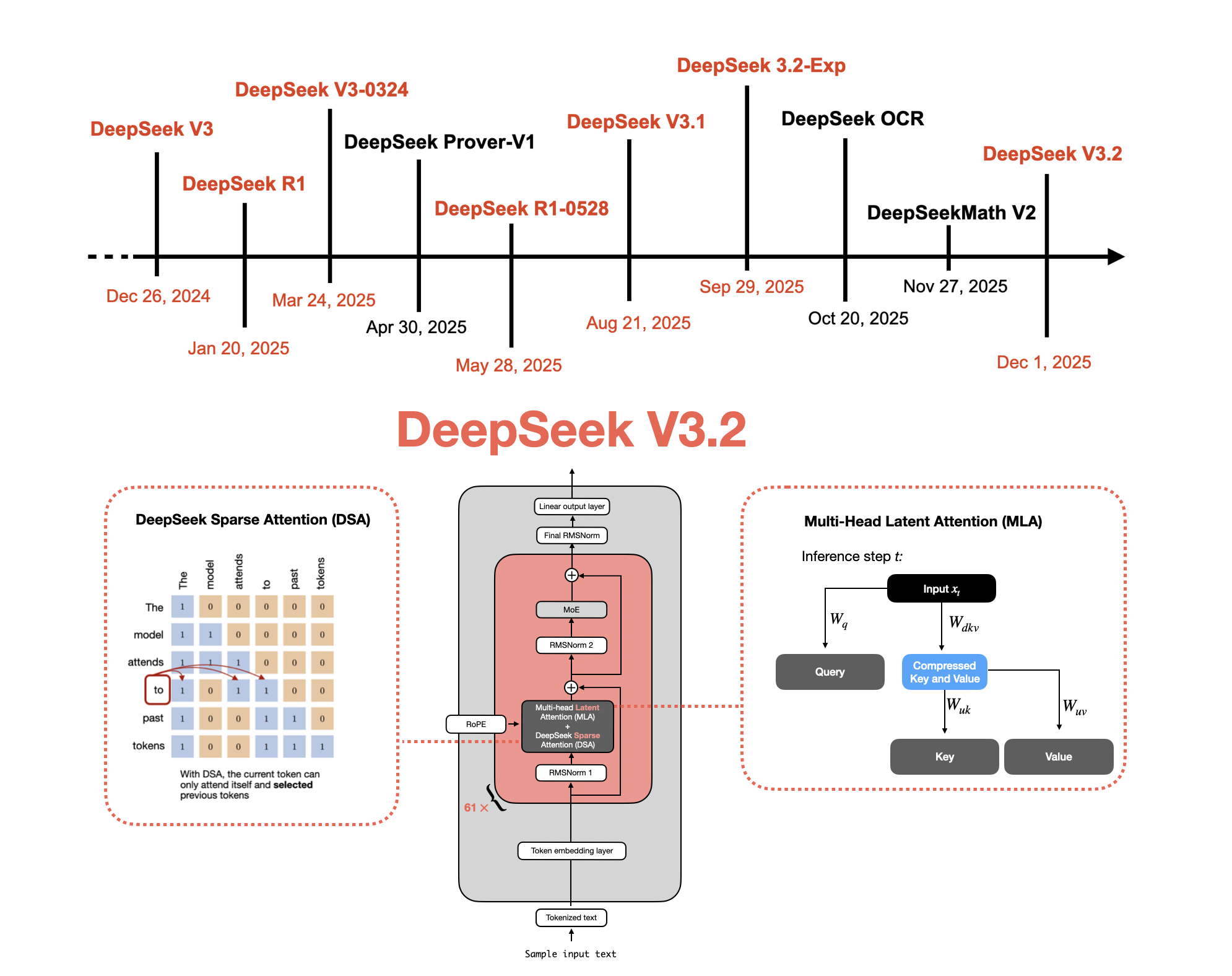
Understanding How DeepSeek's Flagship Open-Weight Models Evolved
The paper investigates the use of a large language model (LLM) agent to automate the creation and execution of a federated learning workflow for medical image analysis. By generating a reviewable specification of constraints and acceptance criteria, the LLM produces an executable workflow, while a validation loop repairs failures and ensures conformance to the specification. Experiments on the FABRIC testbed demonstrate that the approach can detect silent errors—such as a run that trained 1,700 jobs on random tensors—that traditional failure-driven debugging would miss.
arXiv:2606. 06741v1 Announce Type: new Abstract: Self-evolving agents requires adaptation after deployment, but existing approaches assume a usable learning loop, such as curated skills, successful trajectories, or verifier signals.
We’re adding new features to help developers have more control over fine-tuning and announcing new ways to build custom models with OpenAI.
The paper presents a framework of formal operations for assembling context in large language model (LLM)-based engineering design, involving modular context units such as policy prompts, reference units with persistence, and user questions with prompt vectoring. It also introduces a formal method for evaluating modelling-as-code LLM outputs, assessing compliance to intent from LLM answers and the support LLMs provide for systems architecture modelling.
arXiv:2608. 15591v1 Announce Type: new Abstract: Large Language Model (LLM) agents deployed in production environments face a fundamental tension: the agent's behavior is frozen at deployment time, while the business rules and edge cases it must handle continue to evolve.
We’re releasing gpt-oss-120b and gpt-oss-20b—two state-of-the-art open-weight language models that deliver strong real-world performance at low cost. Available under the flexible Apache 2.
The article explains how to transform a small open‑source Qwen LLM into a fast, single‑pass text classifier by replacing its language‑modeling head with a JEV model. It provides a step‑by‑step guide to swapping the head, enabling the LLM to perform classification tasks efficiently. The process leverages the flexibility of open‑source models to create a lightweight, high‑performance classifier.