Mistral AI
Jul 10, 2025
Using Open-Weight Models in Local Coding Harnesses as an Alternative to Claude Code and Codex Subscriptions
CodeRabbit scales agentic software development by using OpenAI models to govern and trust AI-generated code, while employing Codex to ship 20 times more software with the same engineering team.
By Ryan Lopopolo, Member of the Technical Staff
Get the most out of each coding model to have a very powerful coding setup The post How to Combine Claude Code and Codex for Maximum Coding Power appeared first on Towards Data Science .
arXiv:2609.40303v1 Announce Type: new Abstract: Recent autonomous machine learning engineering (MLE) agents have made significant progress on public leaderboards. Often motivated by progress stagnati...
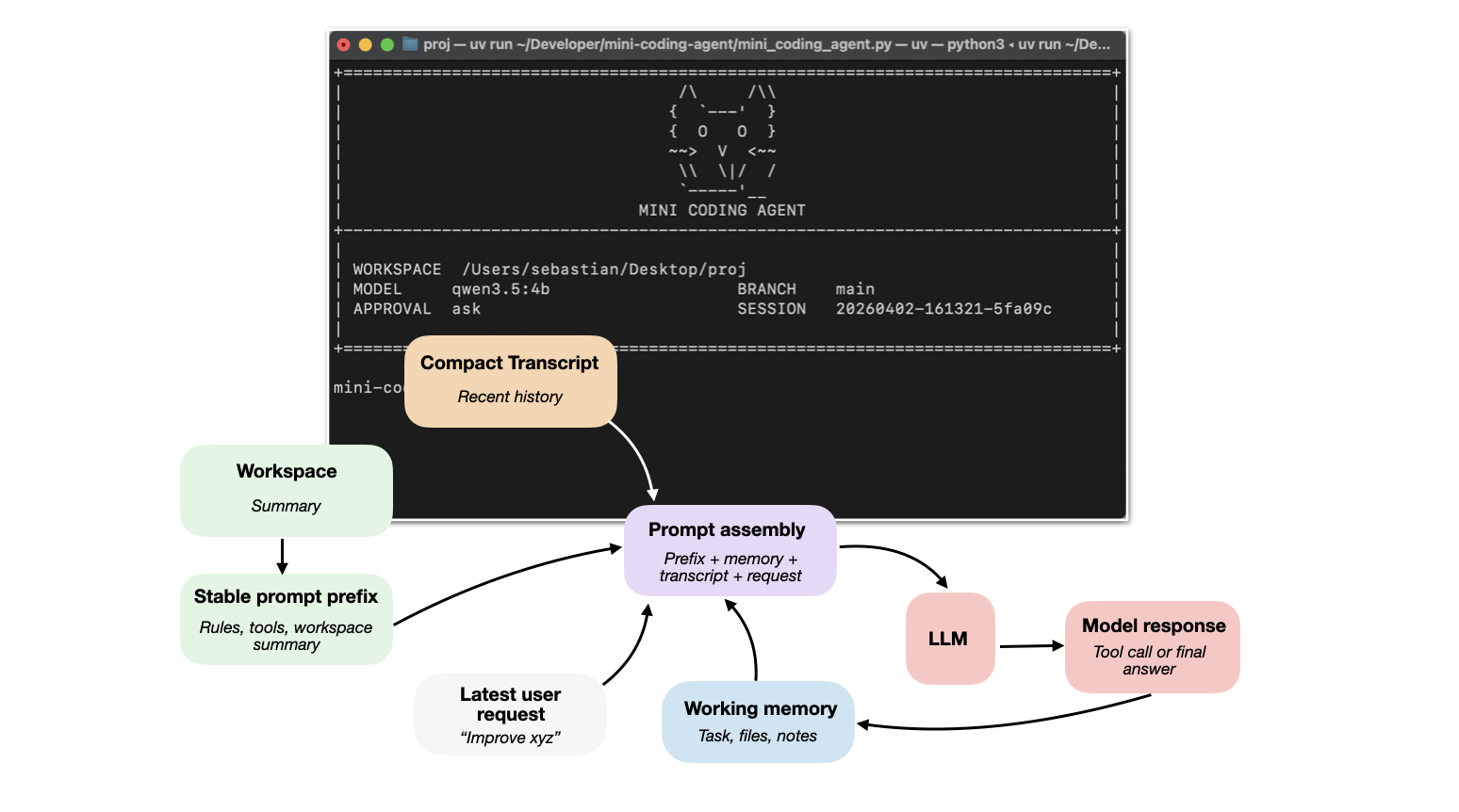
How coding agents use tools, memory, and repo context to make LLMs work better in practice
The paper introduces LibraryDesignBench, a benchmark that tests how well agents can design reusable libraries from specifications without prescribed designs. It evaluates libraries by measuring the correctness and simplicity of programs written by three different user agents across 242 programming problems in four languages. Findings show that while agents often replicate human-designed abstractions, downstream agents still tend to reimplement library features due to rigidity or usability issues, and that providing more prescriptive guidance improves reuse and program simplicity.
The paper introduces Multi-step SWE, a benchmark consisting of 69 software engineering tasks that require a coding agent to perform 5–15 sequential, multi-hour engineering requests on a single codebase. Each step builds on the code produced in the previous step, making early design decisions and errors propagate throughout the chain. The benchmark covers four engineering work families, nine programming languages, and includes both from-scratch builds and existing open-source projects, with each step verified against a source of truth. Across nine state‑of‑the‑art models, the best achieves only an 18.5% solve rate, and 38 tasks remain unsolved by any model.