OpenAI Blog
Jul 7, 2021
Foundations of Large Language Models is a book that focuses on core concepts of large language models rather than exhaustive coverage of the latest technologies. It is organized into six chapters covering pre‑training, generative models, prompting, alignment, inference, and reasoning. The book targets college students, professionals, and practitioners in NLP and related fields, serving as a reference for anyone interested in large language models.
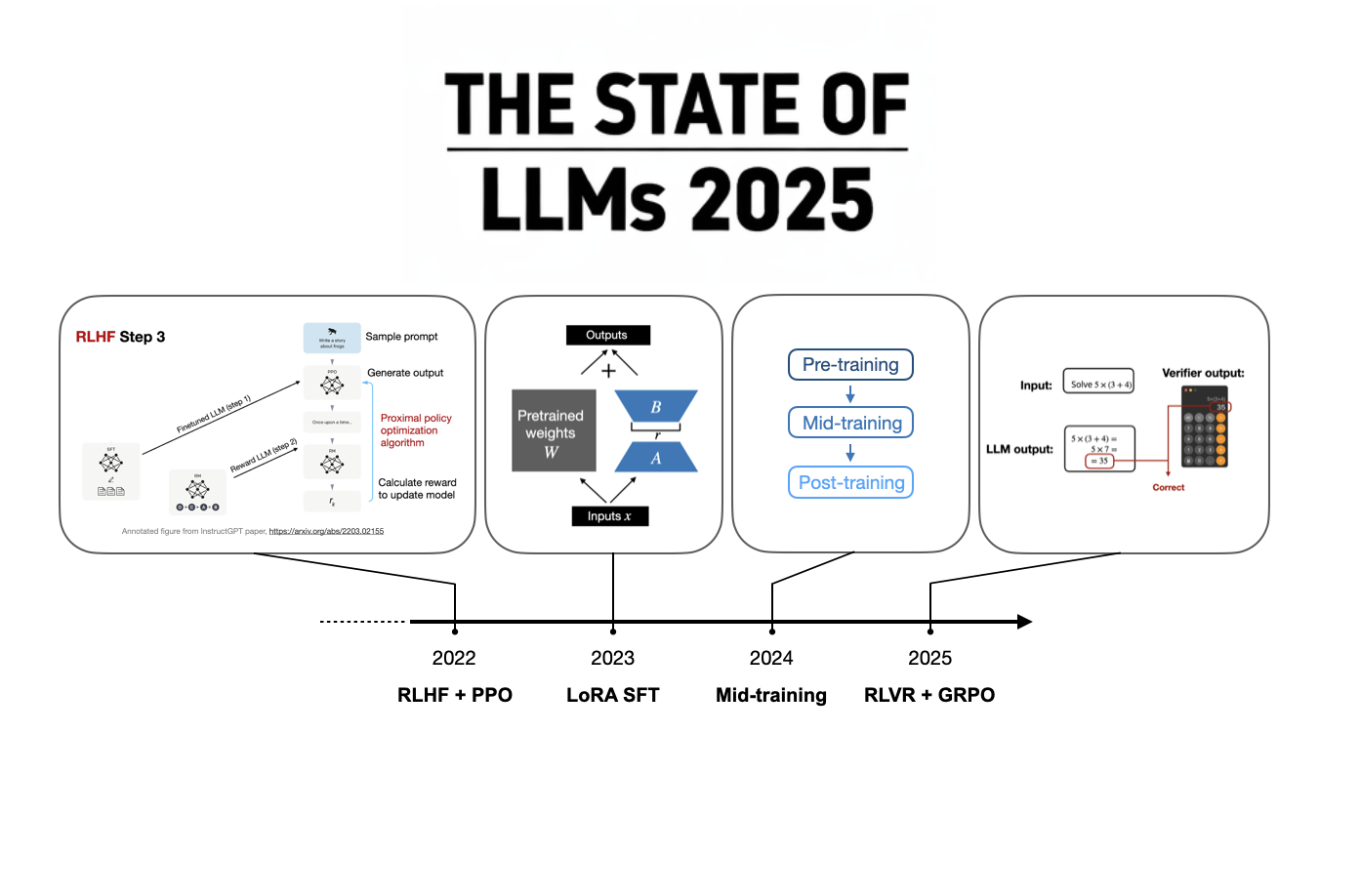
A 2025 review of large language models, from DeepSeek R1 and RLVR to inference-time scaling, benchmarks, architectures, and predictions for 2026.
Still a long way to go, but the future is promising The post Setting Up Your Own Large Language Model appeared first on Towards Data Science .
The paper investigates how many languages should be jointly trained in a single lexical normalization model. Using a fixed-capacity character-level model across twelve languages, it finds that accuracy peaks when a language is trained with only a few others—typically one to four—and then declines sharply as more languages are added, dropping about forty percent. A control experiment keeping total training data constant shows the decline is due to competition for model capacity rather than data scarcity, and no reliable typological rule predicts the optimal number of co‑training languages.