OpenAI Blog
Feb 4, 2021
arXiv:2606. 24504v1 Announce Type: new Abstract: We discuss reasons why the scaling exponents of current Large Language Models (LLMs) applications are indicating an unsustainable regime in terms of energy resources.
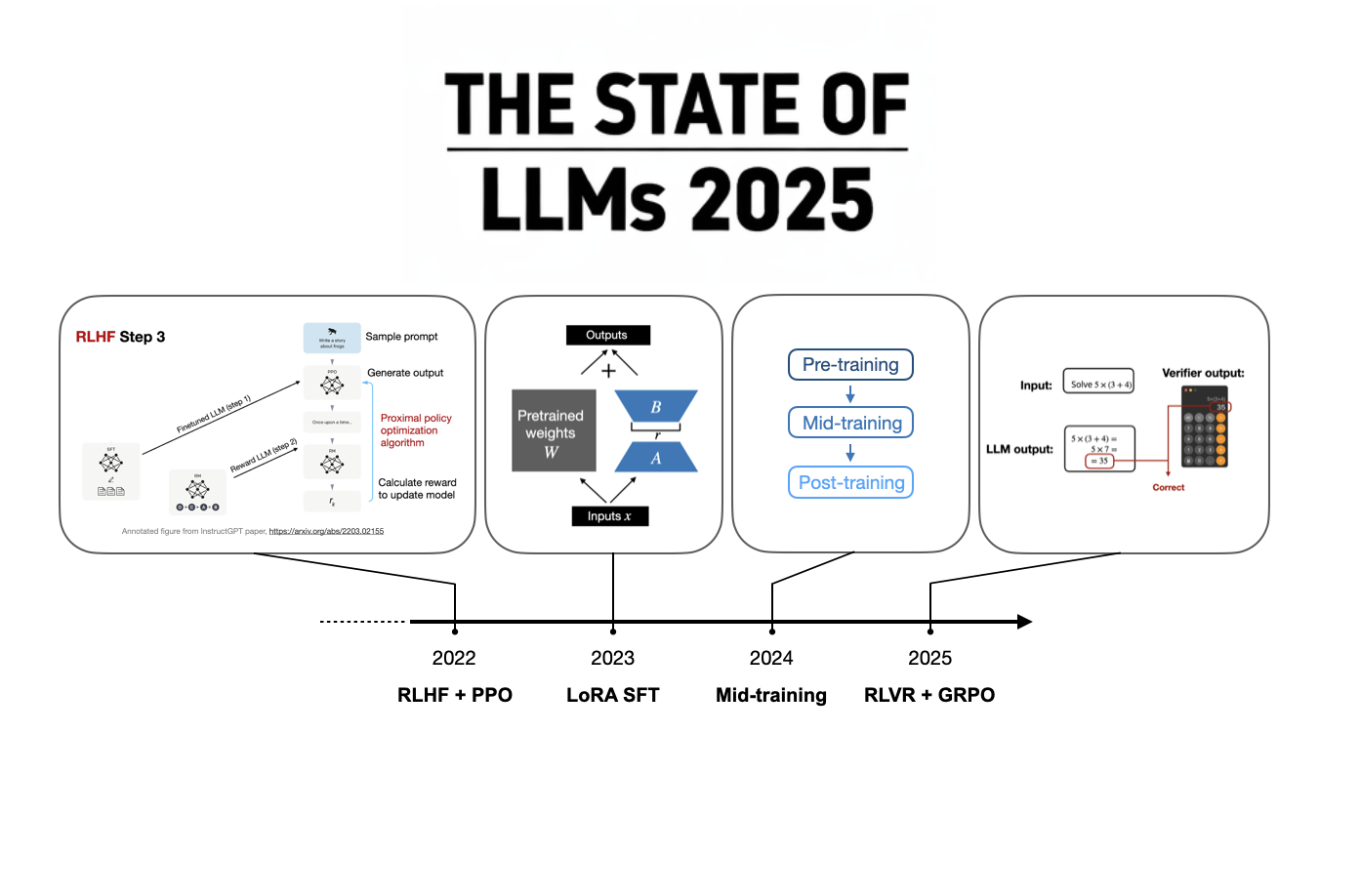
A 2025 review of large language models, from DeepSeek R1 and RLVR to inference-time scaling, benchmarks, architectures, and predictions for 2026.
arXiv:2406. 05335v3 Announce Type: replace-cross Abstract: Generation of text and speech in natural languages can be modeled as a stochastic process.
The paper examines how large language model (LLM) services route queries to models of varying size based on a cheap complexity estimate. It finds that this routing is not register neutral: queries written in non‑standard English registers (e.g., African American English or second‑language English) are systematically assigned to lower‑capacity models because they appear shorter due to omitted function words. Experiments on 37,704 learner sentence pairs and a controlled corpus show that this bias leads to significantly lower accuracy across all model tiers, including the highest‑capacity cloud models, while the routing decision itself adds little marginal cost.