arXiv:2606. 01948v1 Announce Type: cross Abstract: The growing popularity of group activities has increased the need for methods that provide recommendations to groups of users given their individual preferences.
By Mubaraka Sani Ibrahim, Lehel Csat\'o, Isah Charles Saidu
arXiv:2601. 19919v2 Announce Type: replace-cross Abstract: Knowledge distillation (KD) is one of the most effective paradigms for compressing large-scale foundation models into deployable architectures.
By Junseok Lee, Nahun Kim, Sangyong Lee, Chang-Jae Chun
arXiv:2606. 01689v1 Announce Type: cross Abstract: The detection and segmentation of infrared small targets have important application significance in the fields of surveillance and security, maritime rescue and so on.
By Pingping Liu, Aohua Li, Yubing Lu, Jin Kuang, Tongshun Zhang, Qiuzhan Zhou
arXiv:2606. 01607v1 Announce Type: cross Abstract: Federated learning (FL) is a decentralized approach that enables collaborative model training without exposing raw data.
By Nazmus Shakib Shadin, Aaron Cummings, Xinyue Zhang, Bobin Deng
Semantic segmentation of remote sensing imagery requires models that capture both global context and local detail under tight computational budgets. Prior work typically optimizes for one of these axes: attention for global context, convolution for local detail, or compactness for efficiency.
Large Reasoning Models (LRMs) rely on long reasoning traces, making inference expensive. While low-bit quantization reduces per-token decoding cost, we show that aggressive 2-bit inference can fail to deliver end-to-end speedup because instability in the generation process inflates total token count.
Deploying Large Language Models (LLMs) in practice incurs substantial memory and computational costs. Post-training pruning (PTP) is an effective approach to reducing these costs by removing weights without additional training.
Most engineers see quantization as shrinking vectors. TurboQuant asks a harder question: can you shrink them without breaking their geometry?
By Chien Vu Minh
Parameter Golf brought together 1,000+ participants and 2,000+ submissions to explore AI-assisted machine learning research, coding agents, quantization, and novel model design under strict constraints.
apr-fig { text-align: center; margin: 1. 35em 0; line-height: 1.
--> Understanding the behavior of complex machine learning systems, particularly Large Language Models (LLMs), is a critical challenge in modern artificial intelligence. Interpretability research aims to make the decision-making process more transparent to model builders and impacted humans, a step toward safer and more trustworthy AI.
OpenAI partners with Cerebras to add 750MW of high-speed AI compute, reducing inference latency and making ChatGPT faster for real-time AI workloads.
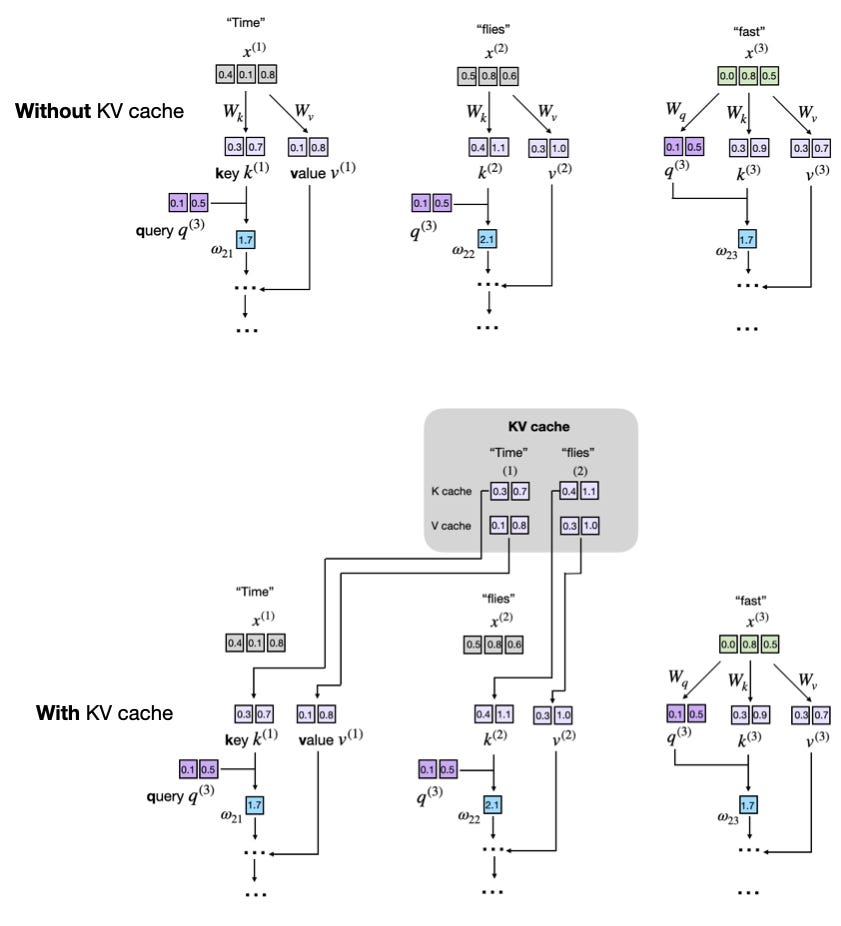
KV caches are one of the most critical techniques for efficient inference in LLMs in production.
By Sebastian Raschka, PhD
Fine-tune a cost-efficient model with the outputs of a large frontier model–all on the OpenAI platform