Hugging Face Blog
May 21, 2025
arXiv:2609.09554v1 Announce Type: new Abstract: We introduce BuzzASR, a collection of language-specialized fine-tuned Whisper models adapted for automatic speech recognition (ASR) in 102 languages. L...
We introduce BuzzASR, a collection of language-specialized fine-tuned Whisper models adapted for automatic speech recognition (ASR) in 102 languages. Large end-to-end Transformer-based ASR models such...
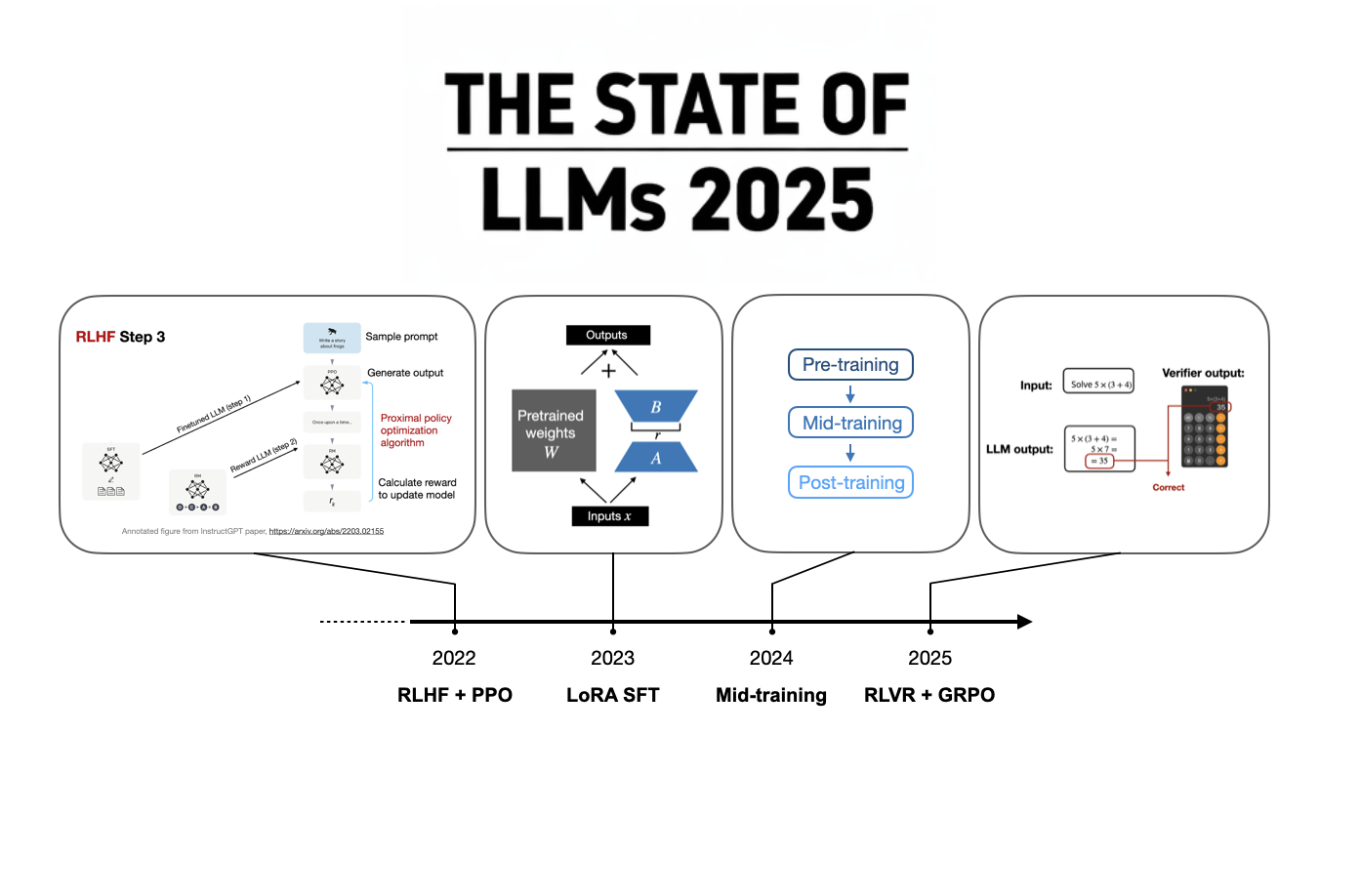
A 2025 review of large language models, from DeepSeek R1 and RLVR to inference-time scaling, benchmarks, architectures, and predictions for 2026.
arXiv:2606. 07608v1 Announce Type: cross Abstract: We present a systematic study of fine-tuning OpenAI's Whisper large-v3 for Swiss German ASR, using 1,367 hours of broadcast speech paired with Standard German subtitles as weak supervision.
arXiv:2510.22588v2 Announce Type: replace-cross Abstract: Spoken dialogue models currently lack the ability for fine-grained speech style control, a critical capability for human-like interaction tha...
The paper investigates whether audio language models encode phonetic features similarly when processing spoken versus written input. By comparing mean representations of minimal phoneme pairs across six models, seven features, and 15 languages, the study finds that only voicing in two Qwen2.5-Omni models shows a significant shared direction, and that the model family—not size—determines feature representation. The analysis uses cosine similarity against a random-pair reference to assess alignment across modalities.