Hugging Face Blog
Dec 31, 2024
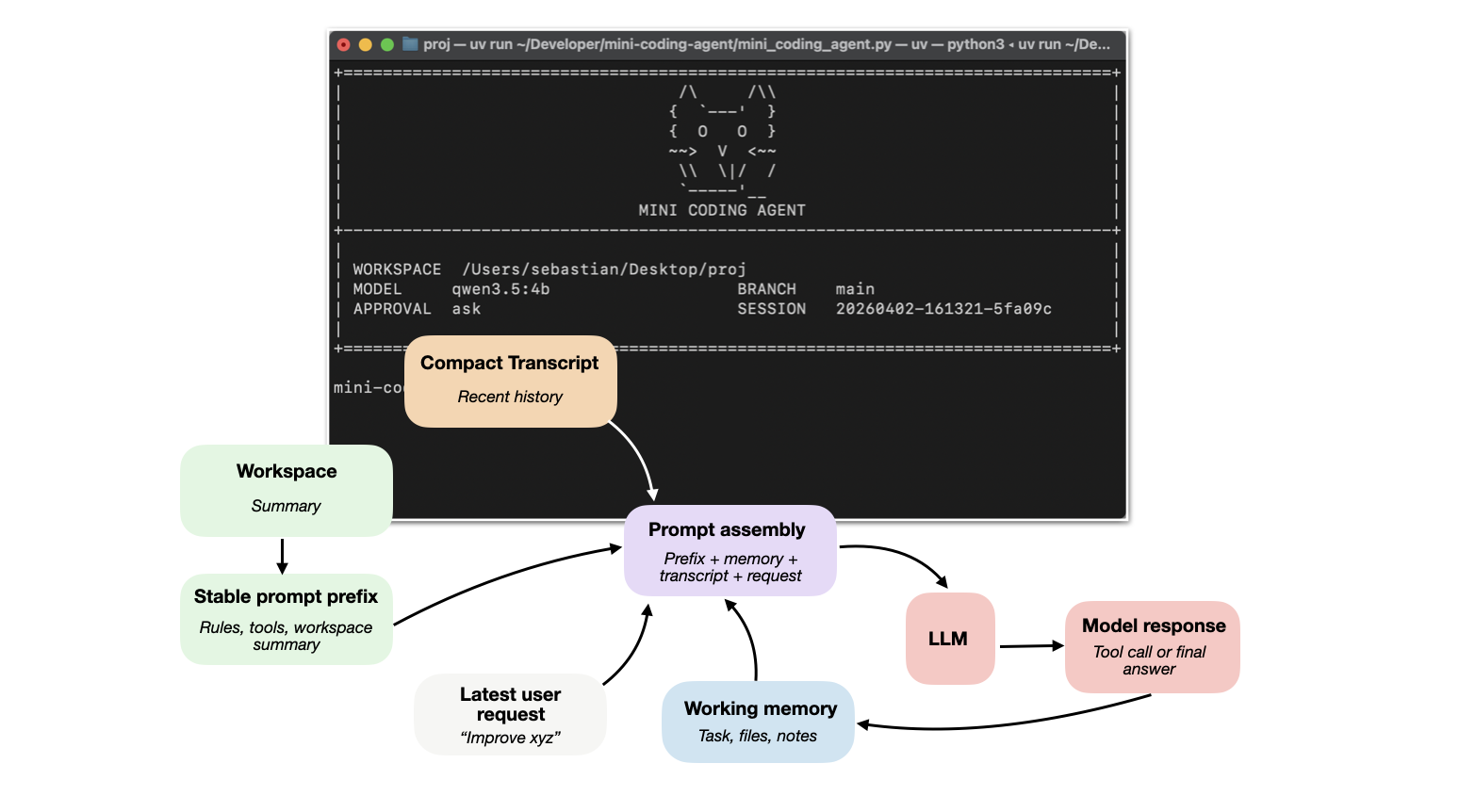
How coding agents use tools, memory, and repo context to make LLMs work better in practice
arXiv:2607. 18161v1 Announce Type: cross Abstract: Coding agents are increasingly used to accelerate code generation in many downstream tasks, such as fixing bugs, building applications, and prototyping.
arXiv:2602.11988v3 Announce Type: replace-cross Abstract: A widespread practice in software development is to tailor coding agents to repositories using context files, such as AGENTS.md. Although thi...
arXiv:2602. 17245v2 Announce Type: replace Abstract: This position paper argues that building a reliable agentic Web requires shifting from low-level interaction primitives to typed actions supported by a semantic layer.
Improve coding agent productiveness with refactored code The post How to Refactor Code with Claude Code appeared first on Towards Data Science .
arXiv:2606. 13097v1 Announce Type: cross Abstract: Code-writing large language models (CodeLLMs) generate executable code policies for embodied agents by translating natural language goals and environmental constraints into structured control programs.
arXiv:2609.22068v1 Announce Type: new Abstract: Training capable coding agents via reinforcement learning (RL) requires diverse tasks with reliable verifiers. Open-source codebases offer a rich sourc...
arXiv:2609.09233v1 Announce Type: cross Abstract: How can language model agents effectively leverage libraries of reusable knowledge to solve long-horizon tasks? Recent work has increasingly focused...