Recovering high dynamic range (HDR) radiance from a single standard dynamic range (SDR) image is highly ill-posed. Extreme luminance variation and severe quantization in dark regions make accurate reconstruction challenging, often leading to visual artifacts and color distortions.
Large language models confabulate chemical objects (molecular formulas, space groups, formation energies) in fluent reasoning traces, concentrated on long-tail entities where confidence is least trustworthy. Deterministic, database-grounded verification can catch and repair such errors without the coverage cost of blanket retrieval; the binding constraint, we find, is detection, not repair.
High quality temporal graph benchmarks with rich semantics and ground-truth anomaly labels are essential for training graph neural networks, yet remain scarce due to privacy constraints and annotation costs. We present SAGA (Synthetic Agentic Graph Architecture), a system for generating large-scale, semantically rich temporal graphs via a four-phase pipeline.
Enterprise Document Intelligence [Vol. 1 #6quinquies] - Prompt engineering, then context engineering, then loop engineering.
By Kezhan Shi
Although mixture-of-experts, MoE, models have been increasingly adopted to scale large language models with moderate computation cost, it remains challenging to deploy MoE inference over resource-constrained and bandwidth-limited edge infrastructures. Existing distributed MoE serving methods mainly rely on exact expert placement, caching, replication, or communication scheduling, while overlooking the functional similarity among experts, which provides an opportunity to reduce cross-server token transmission.
Deep neural networks trained on natural images are shown to produce outputs consistent with human observers for brightness illusions. While this phenomenon has been documented across architectures, all evidence, to date, is measured at the output level: restored pixels, decoded trajectories, or classification decisions.
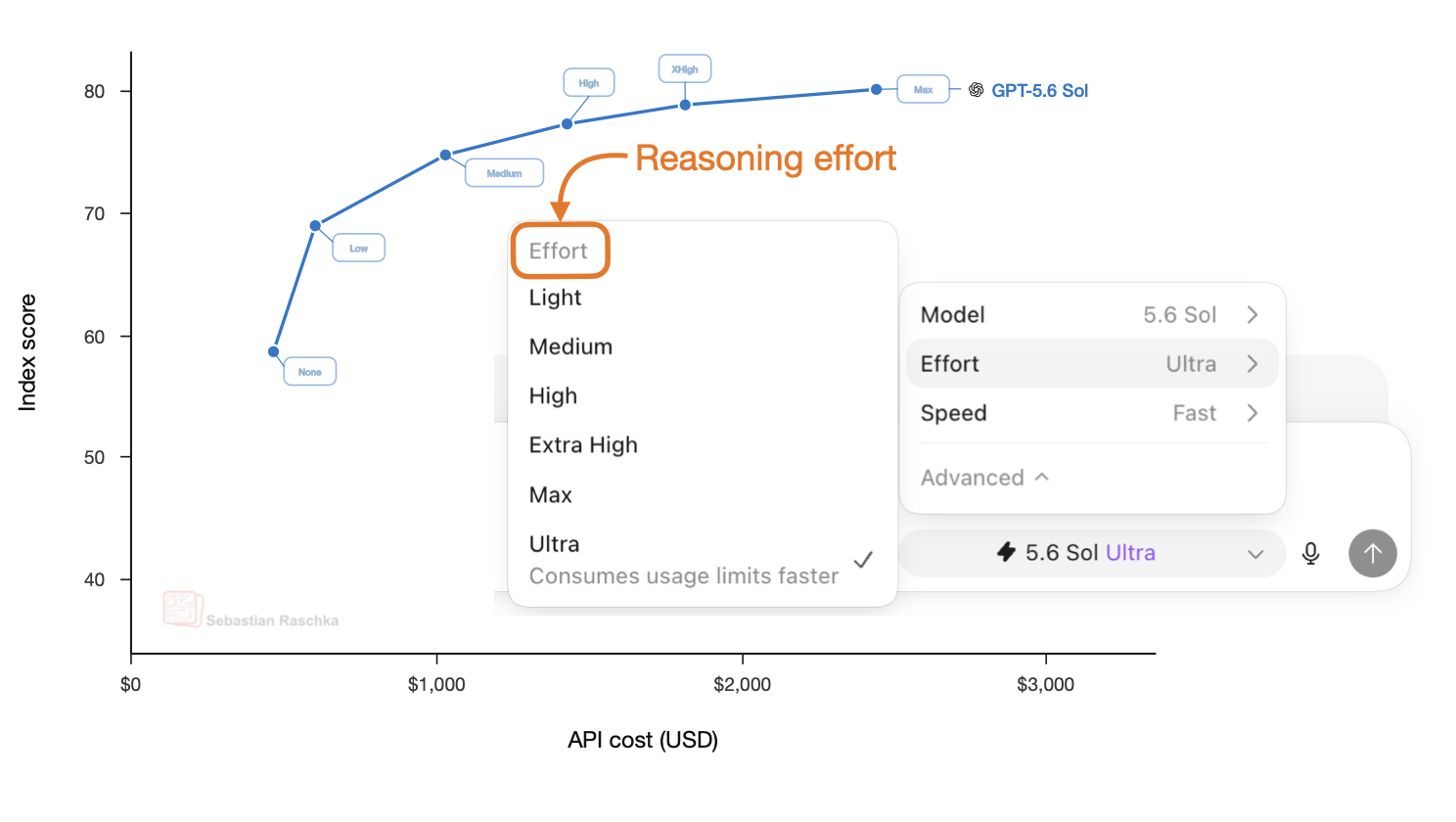
How LLMs Learn Low-, Medium-, and High-Effort Reasoning Modes
By Sebastian Raschka, PhD
Maximize the latest OpenAI model The post How to Work Effectively with GPT-5. 6 appeared first on Towards Data Science .
By Eivind Kjosbakken

Google introduces Gemini 3. 5 Flash Cyber, a lightweight cybersecurity model to find and patch vulnerabilities.
Everyone is talking about loop engineering, but most discussions assume an LLM sits at the center of the loop. I wanted to isolate the architecture itself.
By Emmimal P Alexander
Hyperspectral image (HSI) classification systems are increasingly deployed on platforms with strict computational budgets, such as UAVs and small spaceborne sensors. In these settings, accuracy alone is not enough; the model must also run within tight latency and memory constraints.
arXiv:2607. 14574v1 Announce Type: new Abstract: Collective problem solving often requires that group members consider the tradeoff between exploitation of known solutions and exploration for new ones, where information of known solutions can be disseminated among individual members through communication networks.
By Hao He, Chris J. Kuhlman, Xinwei Deng
arXiv:2607. 14882v1 Announce Type: cross Abstract: With a large controlled vocabulary as the label set, the task of automated subject indexing in a library can be understood as a multi-label classification task.
By Maximilian K\"ahler, Katja Konermann, Lisa Kluge, Markus Schumacher
arXiv:2607. 14169v1 Announce Type: new Abstract: Large language models can synthesize a game's rules as executable code - a Code World Model (CWM) - which a classical planner then searches over.
By Javier Aguilar Mart\'in
arXiv:2602. 12429v2 Announce Type: replace Abstract: Foundation models have achieved remarkable success, yet their growing parameter counts pose significant computational and memory challenges.
By Paul Janson, Edouard Oyallon, Eugene Belilovsky
arXiv:2607. 15161v1 Announce Type: new Abstract: On-policy distillation is an alternative post-training method in reinforcement learning that alleviates the constraints imposed by reward models by providing token-level supervision from a teacher model.
By Byeongho Heo, Jaehui Hwang, Sangdoo Yun, Dongyoon Han
arXiv:2607. 14148v1 Announce Type: cross Abstract: Dance Dance Revolution and In the Groove are rhythm games consisting of songs and accompanying choreography, referred to as charts.
By Miguel O'Malley
arXiv:2607. 14506v1 Announce Type: cross Abstract: While reinforcement learning with verifiable rewards (RLVR) is widely used to improve the reasoning capabilities of large language models (LLMs), the generalizability of the resulting models remains poorly understood.
By Yuxuan Zhu, Rohan Alur, Daniel Kang
arXiv:2607. 11950v2 Announce Type: replace-cross Abstract: Brain field potentials are scale-free: their power spectra follow a $1/f^{\beta}$ law whose aperiodic exponent $\beta$ tracks cortical state, and sleep depth in particular is a shift in $\beta$.
By Dibakar Sigdel
arXiv:2510. 01171v4 Announce Type: replace-cross Abstract: Post-training alignment often reduces LLM diversity, leading to a phenomenon known as mode collapse.
By Jiayi Zhang, Simon Yu, Derek Chong, Anthony Sicilia, Michael R. Tomz, Christopher D. Manning, Weiyan Shi