arXiv AI
CyrillicQA: The Influence of Phonetically Encoded Secret Language on LLM Performance
Read the original on arXiv AI →The Flow has not summarised this story yet — read it at arXiv AI.
The Flow has not summarised this story yet — read it at arXiv AI.
Audio large language models (Audio LLMs) often fail to transcribe English‑Mandarin code‑switching speech, exhibiting language omission, translation‑instead‑of‑transcription, and hallucination. By applying Direct Preference Optimization (DPO) with 100 K preference pairs, the models learn to preserve mixed‑language content rather than translate, leading to significant reductions in mixed‑error rates (up to 89.6% in‑distribution). The study demonstrates that DPO can effectively align multilingual Audio LLMs for accurate code‑switching transcription.
The paper investigates how to close the quality gap in low‑resource text‑to‑speech for Khmer and Korean using the VoxCPM2 model. By training a single low‑rank adaptation (LoRA) adapter on a shared 25.5‑hour corpus, the authors improve Khmer’s mean opinion score from 3.85 to 4.23 with a rank‑64 adapter, while Korean shows no significant gain. The study highlights that adaptation benefits mainly when the base model is weak and that training loss does not always align with human ratings.
arXiv:2607. 23440v1 Announce Type: cross Abstract: In this paper, we push the boundary of LLM reasoning by testing them in a Chinese language game, xiehouyu, with novel xiehouyu created by linguists that had not existed before to avoid data contamination.
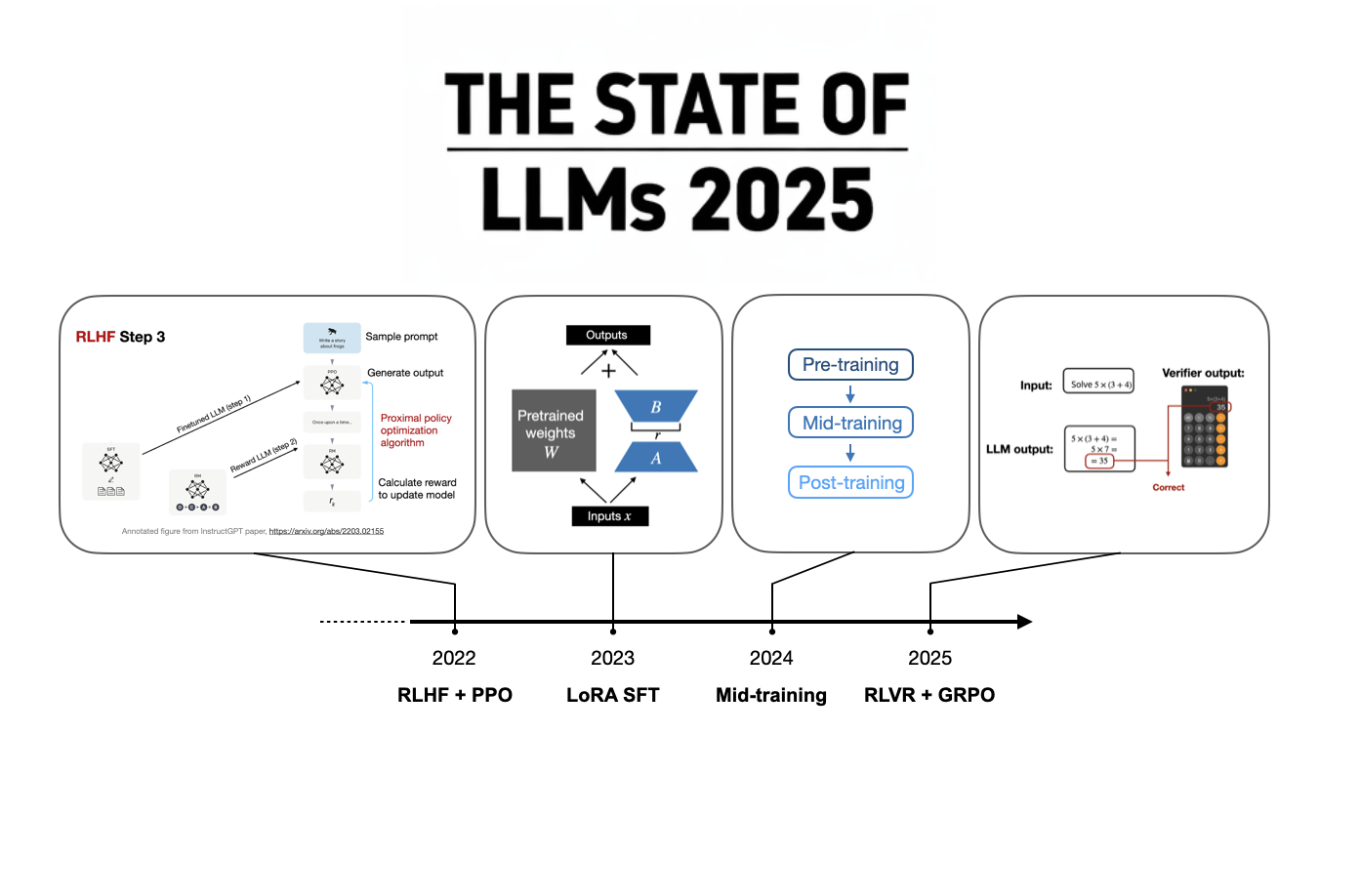
A 2025 review of large language models, from DeepSeek R1 and RLVR to inference-time scaling, benchmarks, architectures, and predictions for 2026.
arXiv:2607. 26751v1 Announce Type: cross Abstract: State-of-the-art intracortical brain-to-text systems pair a neural-sequence phone decoder with an external language model.