arXiv:2608.30047v1 Announce Type: new
Abstract: Recent AI systems promise autonomous scientific discovery, claiming to discover algorithms and produce research papers, yet understanding whether they...
By Shitanshu Bhushan, Yunxiang Zhang, Lu Wang
Simon Willison reflects on his experience with coding agents, noting that while they enable impressive feats, they also complicate software engineering. He emphasizes that fully harnessing their capabilities demands exceptional discipline and deep knowledge. The article highlights the dual nature of coding agents as both powerful tools and challenging additions to development workflows.
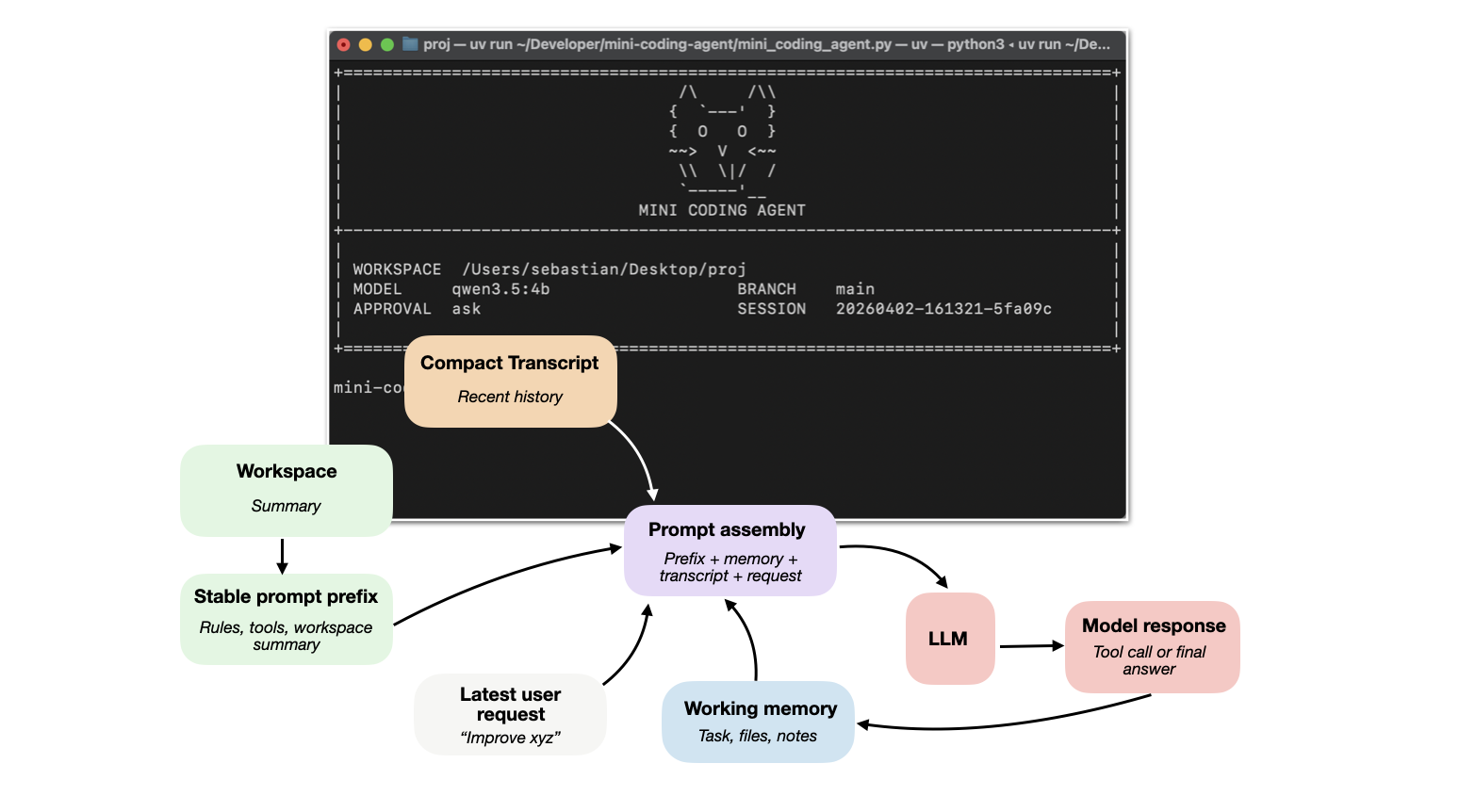
How coding agents use tools, memory, and repo context to make LLMs work better in practice
By Sebastian Raschka, PhD
arXiv:2601. 15797v2 Announce Type: replace Abstract: Many theorists maintain that conscious intentional agency is a necessary condition of creativity.
By James S. Pearson, Matthew J. Dennis, Marc Cheong
Understanding ow LLMs interact with the world around them, from returning data to taking action The post Tool Calling, Explained: How AI Agents Decide What to Do Next appeared first on Towards Data Science .
By Maria Mouschoutzi
Use coding agents to power your knowledge base The post How to Build a Powerful LLM Knowledge Base appeared first on Towards Data Science .
By Eivind Kjosbakken
arXiv:2609.14057v1 Announce Type: new
Abstract: Frontier LLMs are increasingly capable of conducting automated research, yet their creativity in this setting has not been systematically evaluated. In...
By Yiheng Zhao, Mengzhuo Chen, Chengming Hu, Pengyi Liao, Yiran Pang
arXiv:2607. 20796v1 Announce Type: new Abstract: This paper examines the question of whether artificial intelligence (AI) systems can be creative, approached from the dual perspective of a researcher trained in electrical engineering, pattern recognition, machine learning, and neural networks, who has also spent most of his life engaged in the arts as actor, stage and film director, writer, composer, and visual artist, and in philosophy.
By Ivan Magrin-Chagnolleau
Large language models (LLMs) have achieved remarkable progress in language understanding, reasoning, and generation, sparking growing interest in their creative potential. Realizing this potential requires systematic and scalable methods for evaluating creativity across diverse tasks.
arXiv:2608. 19437v1 Announce Type: cross Abstract: Many benchmarks track Large Language Model (LLM) performance on tasks with verifiable answers, but less is known about how LLM performance is evolving on open-ended tasks, where creativity, originality and diversity may matter as much as quality.
By Nirav Patel, Josiah Crossman, Eva Aggarwal, Emily Wenger
arXiv:2606. 11762v1 Announce Type: cross Abstract: Large language models (LLMs) have achieved remarkable progress in language understanding, reasoning, and generation, sparking growing interest in their creative potential.
By Min Sen Tan, Zachary Kit Chun Choy, Syed Ali Redha Alsagoff, Nadya Yuki Wangsajaya, Mohor Banerjee, Swaagat Bikash Saikia, Alvin Chan
The article titled "Insight Is Still the Currency of Data Science" discusses how coding agents free up time for discovery and argues that review practices should evolve to align with analytical work. It emphasizes the importance of focusing on insight rather than merely producing code. The piece was originally published on Towards Data Science.
By Andrew Hinton