Enterprise Document Intelligence [Vol. 1 #4bis] - A coauthor note on the brick-by-brick pitfalls that justified the four-brick split, before Part II walks the fixes The post 10 Common RAG Mistakes We Keep Seeing in Production appeared first on Towards Data Science .
By Kezhan Shi
The study evaluates large language model (LLM) graders on two computer‑science exams, testing 171 configurations of closed‑ and open‑weights models. While the best LLM configuration achieved a mean absolute error of 1.64/35—better than the 2.61/35 error between two human graders—its performance was highly sensitive to the prompt. A short "strict grader" preamble caused most open‑weight models to exceed acceptable error thresholds or stop grading entirely, whereas fine‑tuning with a single LoRA adapter restored parity with human graders and reduced sensitivity to harsh prompts.
By Ali Habibullah, Yazan Alshoibi, Mohammad Alshiekh, Salman Khan, Naeemullah Khan
The article titled "10 Positions for Enterprise RAG That Mainstream Tutorials Get Wrong" discusses ten key positions related to Enterprise Document Intelligence, as outlined in the series "Enterprise Document Intelligence [Vol.1 #M3]. It also provides a map of every article that supports these positions.
By Kezhan Shi
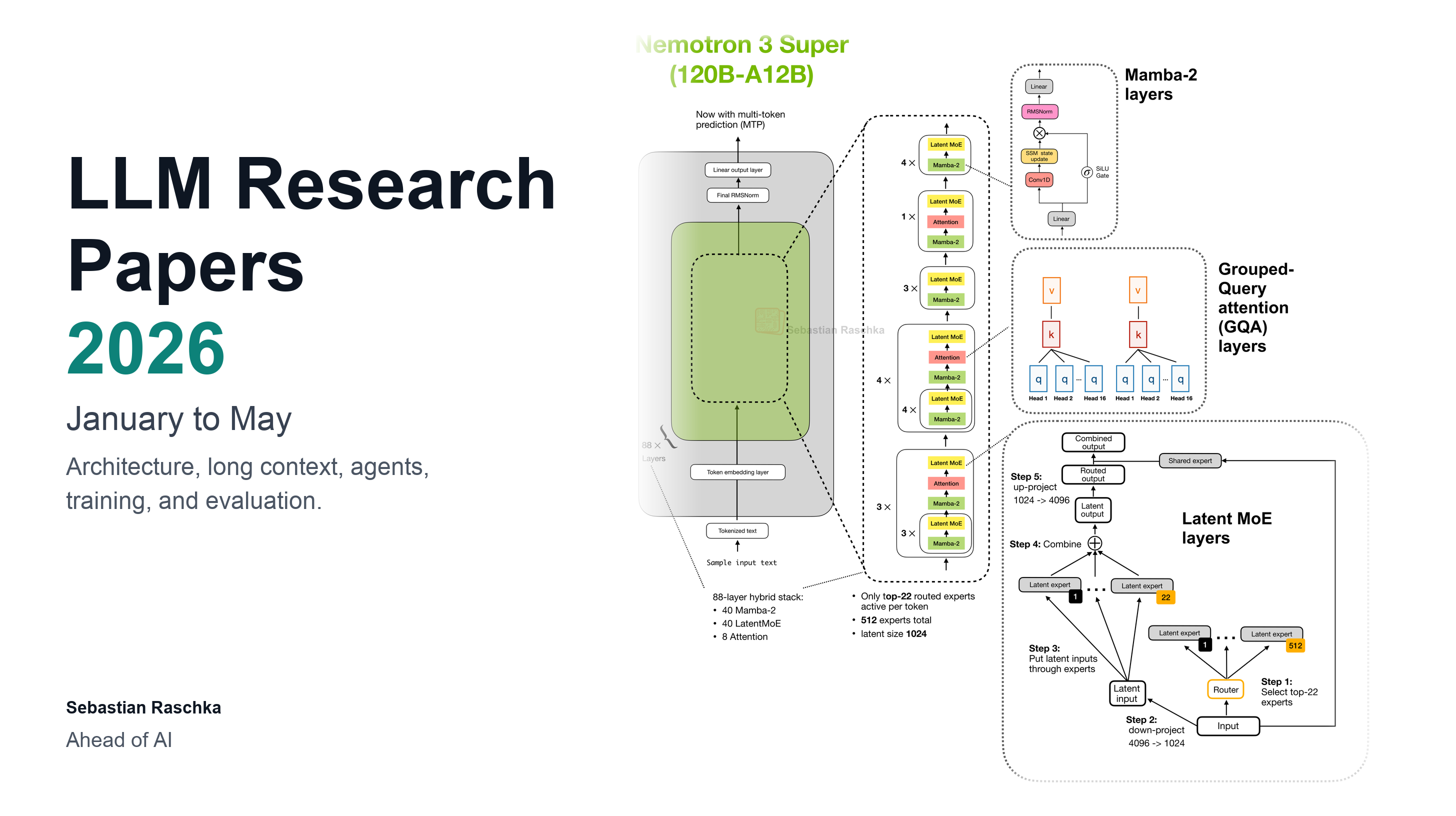
A curated roundup of notable LLM research papers that came out this year
By Sebastian Raschka, PhD
The article "How to Fine-Tune an LLM: An End-to-End Guide" offers a practical, hands‑on walkthrough for fine‑tuning large language models in real‑world scenarios. It covers the entire process from data preparation to deployment, providing readers with actionable steps to adapt LLMs to specific tasks. The guide is aimed at practitioners looking to implement fine‑tuning in a structured, end‑to‑end manner.
By Sam Black
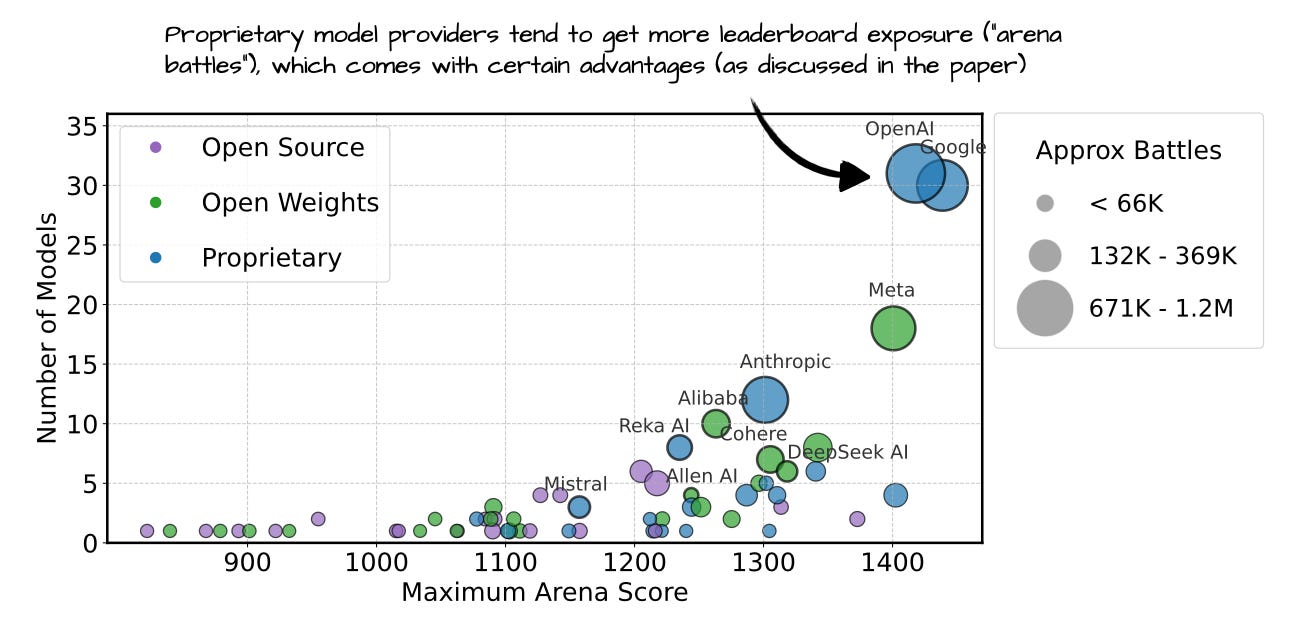
A topic-organized collection of 200+ LLM research papers from 2025
By Sebastian Raschka, PhD
arXiv:2606. 08400v1 Announce Type: cross Abstract: Graduate-level research reading report assessment creates a substantial labor burden for educators.
By Qilin Zhou, Zhuo Wang, Yue Li, W. K. Chan
Enterprise Document Intelligence [Vol. 1 #3] - Why the ML toolkit (hyperparameter sweeps, train/test splits, explainability frameworks) solves the wrong problem, and what to use instead The post RAG Is Not Machine Learning, and the ML Toolkit Solves the Wrong Problem appeared first on Towards Data Science .
By angela shi
The paper investigates how open‑book scoring evaluates document‑level LoRA adapters by training one adapter per Wikipedia article on Llama‑3.1‑8B‑Instruct. Results show that open‑book scores largely reflect a shared reading behaviour: a random adapter can recover most of a specialist’s advantage when the document is provided, but only a negligible fraction when the document is omitted in a cloze probe. While specialists improve cloze recall and their weight updates align with the documents they read, selecting adapters by weight‑space proximity or text embedding does not outperform random choice, and merged adapters recover most of the open‑book advantage but only a small portion of the cloze advantage. The study also documents four silent errors that yielded clean but incorrect results.
By Martino M. L. Pulici, Cuong Xuan Chu, Evgeny Kharlamov, Volker Tresp
arXiv:2601.17036v2 Announce Type: replace-cross
Abstract: ArXiv recently prohibited the upload of unpublished review papers to its servers in the Computer Science domain, citing a high prevalence of...
By Yanai Elazar, Maria Antoniak
Enterprise Document Intelligence [Vol. 1 #9B] - One call wires the four upgraded bricks together, run on a paper, a NIST standard, and a report with a broken TOC The post One RAG Pipeline, Four Very Different PDFs: Same Four Bricks, Every Answer Typed and Cited appeared first on Towards Data Science .
By angela shi
arXiv:2609.18154v1 Announce Type: cross
Abstract: We describe our system for LitTraceQA (GroundLM @ EMNLP 2026): given a research question, retrieve the relevant papers from a pool of 27,487, cite th...
By Aaditya Chauhan