arXiv:2608.30047v1 Announce Type: new
Abstract: Recent AI systems promise autonomous scientific discovery, claiming to discover algorithms and produce research papers, yet understanding whether they...
By Shitanshu Bhushan, Yunxiang Zhang, Lu Wang
Simon Willison reflects on his experience with coding agents, noting that while they enable impressive feats, they also complicate software engineering. He emphasizes that fully harnessing their capabilities demands exceptional discipline and deep knowledge. The article highlights the dual nature of coding agents as both powerful tools and challenging additions to development workflows.
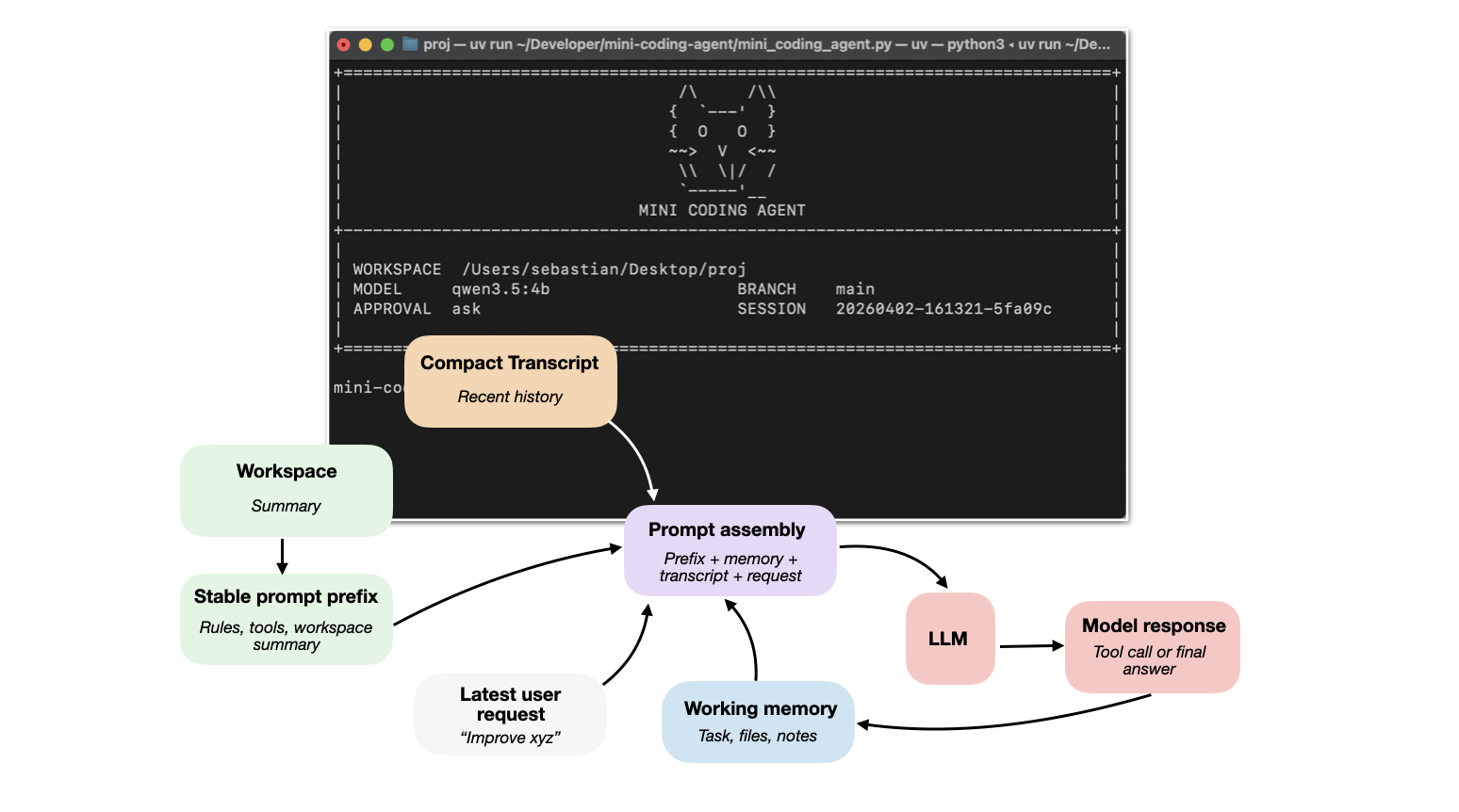
How coding agents use tools, memory, and repo context to make LLMs work better in practice
By Sebastian Raschka, PhD
Design Creativity Bench is a new benchmark that evaluates the diversity and appropriateness of UI designs generated by large language models (LLMs). It measures originality (distinctiveness among models on the same prompt), creative range (how much designs change between prompts for the same UI goal), and appropriateness (how many brief criteria each design meets). The benchmark shows that LLMs produce designs that are far less original and less varied than human designs, though they are generally appropriate.
The paper addresses the lack of a formal, empirically applicable definition of computational creativity across diverse domains. It proposes postulates grounded in psychological theory, particularly Boden’s criteria of newness, value, and surprise, and introduces a mathematical definition aligned with these postulates. The authors validate the definition by applying it to chess moves and paintings by artists such as Picasso and Renoir, demonstrating its ability to capture creative patterns in both domains.
By Jingyi Yang, Alexander Tuzhilin
arXiv:2601. 15797v2 Announce Type: replace Abstract: Many theorists maintain that conscious intentional agency is a necessary condition of creativity.
By James S. Pearson, Matthew J. Dennis, Marc Cheong