OpenAI Blog
Mar 11
Designing AI agents to resist prompt injection
How ChatGPT defends against prompt injection and social engineering by constraining risky actions and protecting sensitive data in agent workflows.
Model releases, architecture work and prompting research on large language models — from frontier-lab announcements to the arXiv papers behind them.
How ChatGPT defends against prompt injection and social engineering by constraining risky actions and protecting sensitive data in agent workflows.
IH-Challenge trains models to prioritize trusted instructions, improving instruction hierarchy, safety steerability, and resistance to prompt injection attacks.
ChatGPT introduces interactive visual explanations for math and science, helping students explore formulas, variables, and concepts in real time.
Introducing GPT-5. 4, OpenAI’s most most capable and efficient frontier model for professional work, with state-of-the-art coding, computer use, tool search, and 1M-token context.
OpenAI introduces ChatGPT for Excel and new financial app integrations, powered by GPT-5. 4 to accelerate modeling, research, and analysis in regulated environments.
By focusing on people, not pilots, the Bundesliga club is scaling efficiency, creativity, and knowledge—without losing its football identity.
A new preprint extends single-minus amplitudes to gravitons, with GPT-5. 2 Pro helping derive and verify nonzero graviton tree amplitudes in quantum gravity.
Gemini 3. 1 Flash-Lite is our fastest and most cost-efficient Gemini 3 series model yet.
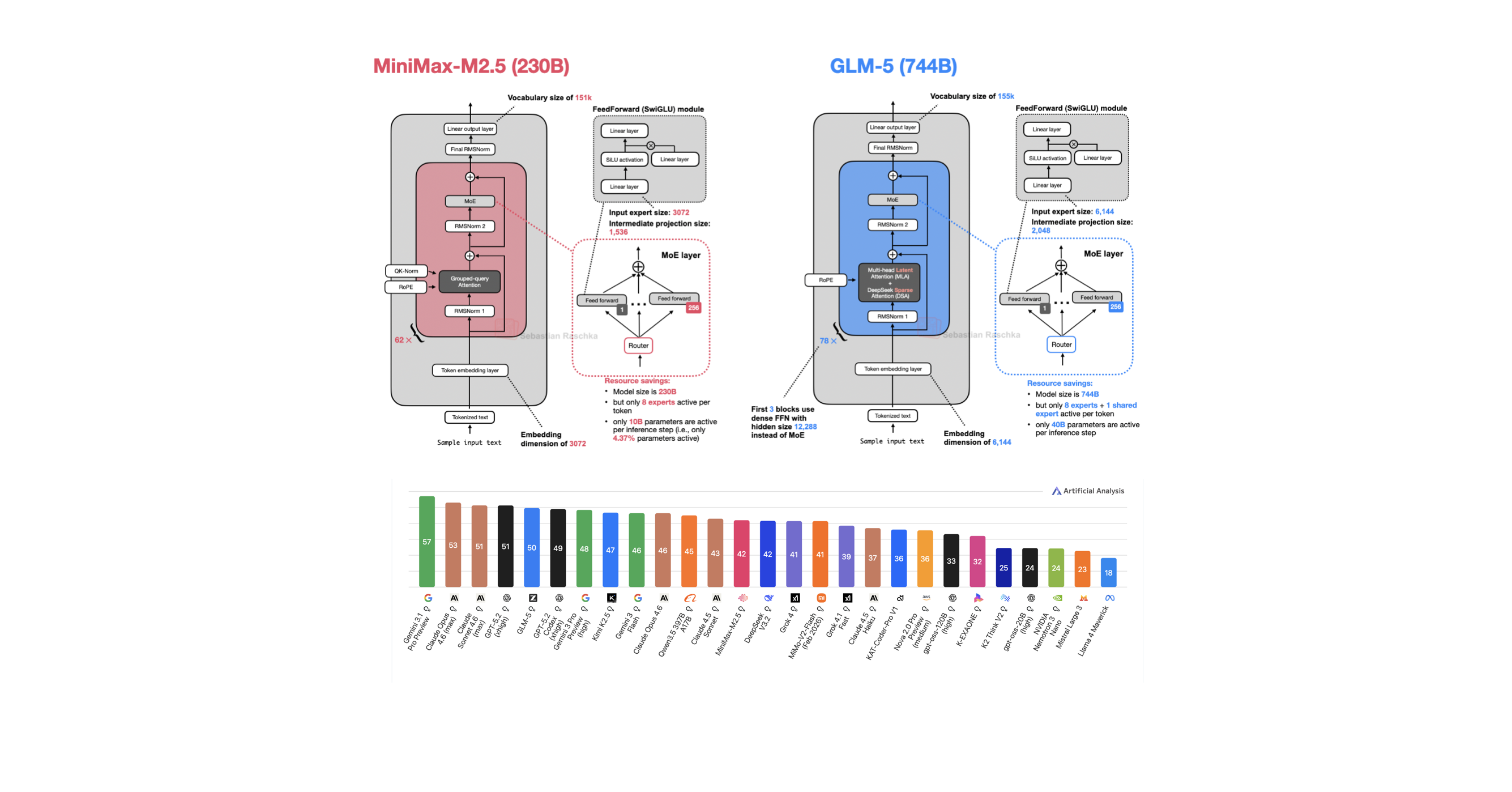
A Round Up And Comparison of 10 Open-Weight LLM Releases in Spring 2026
3. 1 Pro is designed for tasks where a simple answer isn’t enough.
The Gemini app now features our most advanced music generation model Lyria 3, empowering anyone to make 30-second tracks using text or images.
A new preprint shows GPT-5. 2 proposing a new formula for a gluon amplitude, later formally proved and verified by OpenAI and academic collaborators.
Introducing Lockdown Mode and Elevated Risk labels in ChatGPT to help organizations defend against prompt injection and AI-driven data exfiltration.
GABRIEL is a new open-source toolkit from OpenAI that uses GPT to turn qualitative text and images into quantitative data, helping social scientists analyze research at scale.