arXiv:2606. 19744v1 Announce Type: cross Abstract: Aligning language models with human preferences often requires optimising multiple behavioural objectives.
By Pranav Bhandari, Nicolas Fay, Amitava Datta, Usman Naseem, Mehwish Nasim
arXiv:2606. 12505v1 Announce Type: cross Abstract: Offline preference optimization has become a practical substitute for reinforcement learning from human feedback, but pairwise objectives such as Direct Preference Optimization (DPO) and its variants use only the chosen and rejected responses stored in a static dataset.
By Pengwei Sun
The paper introduces Comparison-based Preference Optimization (ComPO), a zeroth-order method that aligns large language models with human preferences using comparison oracles instead of direct differentiable loss optimization. It provides theoretical convergence guarantees for both offline and online variants under smoothness, gradient sparsity, and oracle compatibility assumptions, and establishes performance bounds under local coverage and in-distribution reward accuracy. Experiments on several LLMs (Mistral, Llama, Gemma-2, Qwen3, Gemma-3) show that ComPO outperforms existing direct alignment methods, achieving higher length-controlled win rates and diagnostics that suggest mitigation of likelihood displacement.
By Peter Chen, Xi Chen, Wotao Yin, Tianyi Lin
arXiv:2602. 09533v2 Announce Type: replace Abstract: Direct preference optimization (DPO) has emerged as a promising approach for aligning large language models (LLMs) with human preferences.
By Masanari Oi, Mahiro Ukai, Masahiro Kaneko, Naoaki Okazaki, Nakamasa Inoue
The paper investigates how the quality of instructions used to generate response pairs affects preference learning for language models. It shows that low‑quality or ambiguous instructions limit the range of response quality, weakening preference signals, and introduces an instruction‑refinement pipeline that improves data quality without discarding examples. Experiments across models and benchmarks demonstrate that refining instructions leads to better alignment and complements other data‑improvement methods.
By Seohyeong Lee, Hwaran Lee, Buru Chang
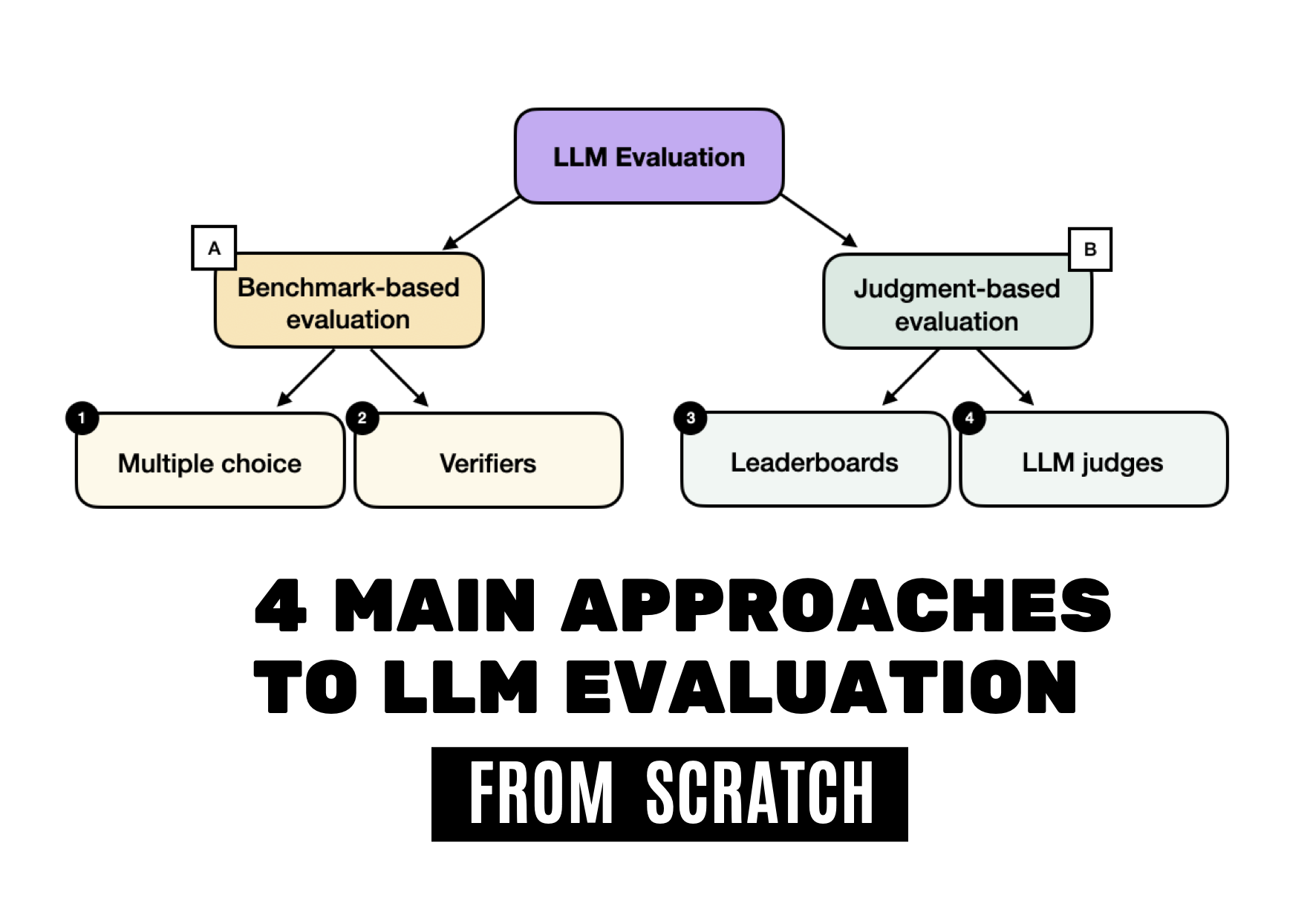
Multiple-Choice Benchmarks, Verifiers, Leaderboards, and LLM Judges with Code Examples
By Sebastian Raschka, PhD
The paper introduces VA‑DPO, a method that trains language models to generate text with a specified continuous affect point in the Valence‑Arousal plane. By using a frozen VA regressor to score candidate generations and selecting pairs with a distance margin, the approach modifies Direct Preference Optimization to better hit target emotions. Experiments on Llama‑3.1‑8B‑Instruct show a 33% reduction in mean VA distance compared to system‑prompting and 25% over few‑shot prompting, while maintaining performance on benchmarks like MMLU, HellaSwag, and TruthfulQA.
By Hyunwoo Kim