Hugging Face Blog
Judge Arena: Benchmarking LLMs as Evaluators
Read the original on Hugging Face Blog →The Flow has not summarised this story yet — read it at Hugging Face Blog.
The Flow has not summarised this story yet — read it at Hugging Face Blog.
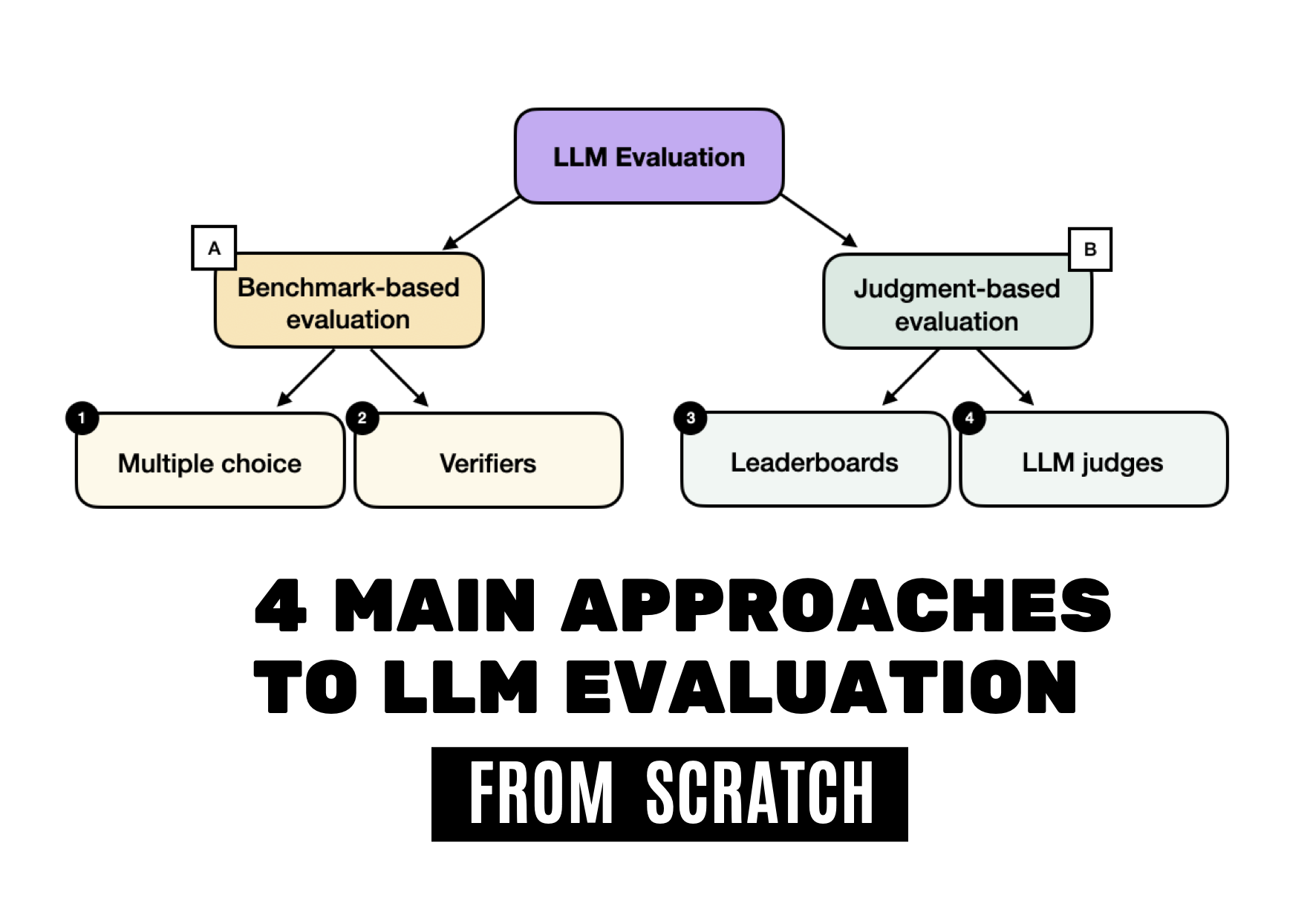
Multiple-Choice Benchmarks, Verifiers, Leaderboards, and LLM Judges with Code Examples
arXiv:2607. 08535v1 Announce Type: cross Abstract: An LLM-as-judge score can move even when the candidate responses stay fixed, simply because the evaluator has changed.
The study compares Jev, a typed classifier that outputs probabilities over allowed answers, with three flash-tier LLM rubric judges across nine panels from seven benchmarks. Jev’s accuracy differs significantly from an LLM judge in only 8 of 27 paired comparisons, performing best on binary criteria and worse only on graded ones, while most other comparisons are inconclusive. In terms of cost and speed, Jev is 29 to 325 times cheaper and 30 to 220 times faster than the LLM judges, and a cascade that defers uncertain Jev verdicts to an LLM yields only modest gains of up to 2.0 points over the best single judge.
arXiv:2604. 22891v4 Announce Type: replace-cross Abstract: LLM-as-a-Judge has become a dominant approach in automated evaluation systems, playing critical roles in model alignment, leaderboard construction, quality control, and so on.
The paper introduces LongJudgeBench, a benchmark designed to evaluate large language models (LLMs) acting as judges for long-form text generation. It highlights that long-form evaluation requires complex, document-level assessments beyond simple length, such as organization, coverage, depth, consistency, and scenario-specific quality. Experiments show a significant reliability gap among current LLM judges, indicating instability across scenarios and limited effectiveness of rubrics or references.
The study investigates whether Jev, a typed classifier that outputs probabilities over allowed answers without generating text, can replace large language model (LLM) rubric judges. Across nine panels from seven benchmarks, Jev’s accuracy differed significantly from LLM judges in only 8 of 27 paired comparisons, performing best on binary criteria and worse only on graded ones, while most other comparisons were inconclusive. In terms of cost and speed, Jev was 29 to 325 times cheaper and 30 to 220 times faster than the flash‑tier LLM judges, and a cascade approach that defers uncertain Jev verdicts to an LLM yielded only modest gains. whyItMatters":"The findings suggest that a lightweight classifier like Jev can serve as an efficient first‑stage evaluator, potentially reducing the reliance on expensive and slow LLM judges in automated grading pipelines."