The article titled "The AI That Learned to Understand Long After It Stopped Trying" discusses a small, strange discovery in machine learning known as grokking. It highlights how this phenomenon involves an AI developing understanding after ceasing to actively try. The piece was originally published on Towards Data Science.
By Utkarsh Mangal
arXiv:2607. 03634v1 Announce Type: new Abstract: Artificial intelligence (AI) has achieved extraordinary capabilities despite lacking many of the conceptual and scientific foundations associated with mature disciplines.
By Timothy Nguyen
The best AI models still hallucinate. These hallucinations are sometimes funny, and sometimes cause actual damage.
By Omer Rosenbaum
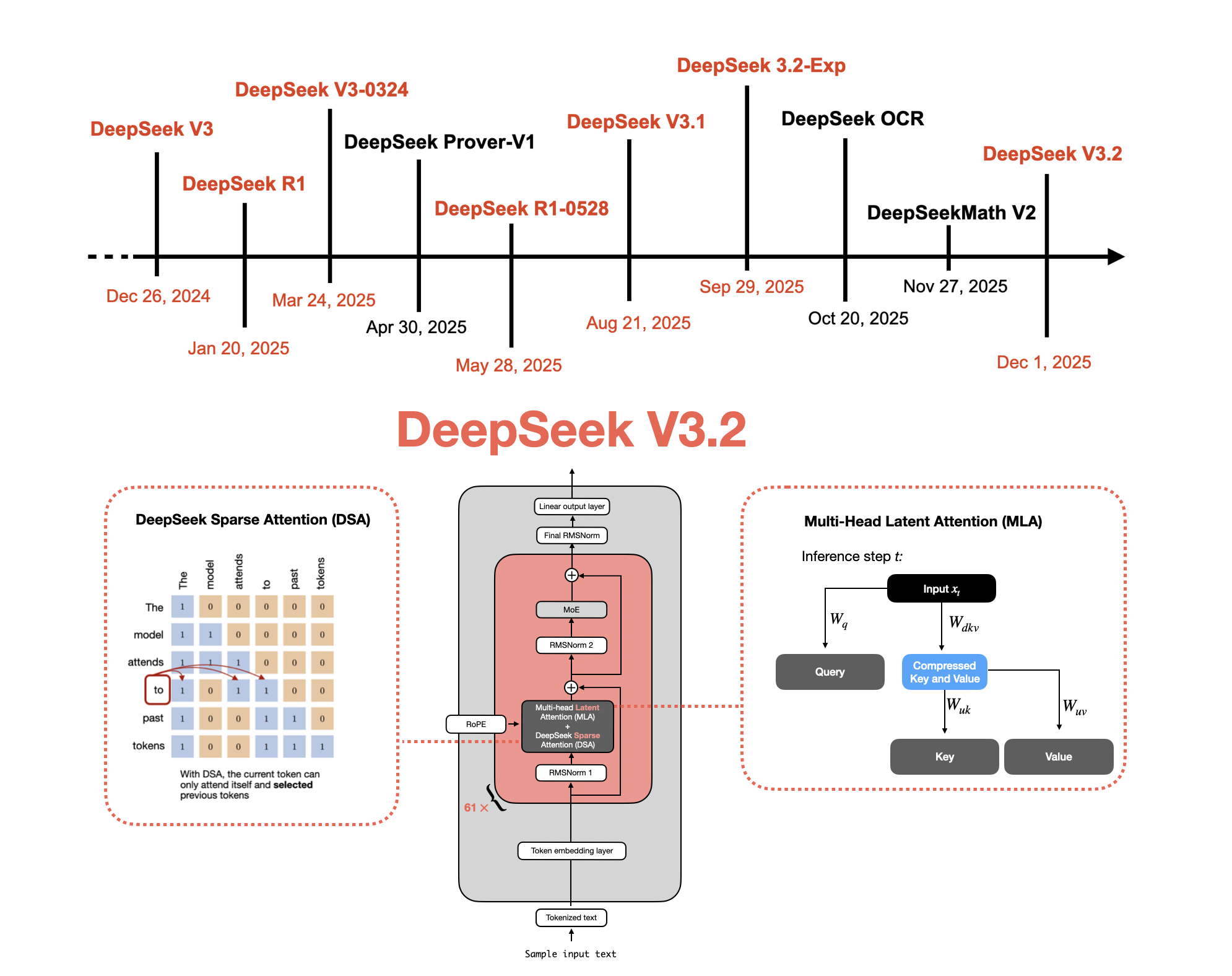
Understanding How DeepSeek's Flagship Open-Weight Models Evolved
By Sebastian Raschka, PhD
How AI has massively changed my day-to-day workflow The post A Day in the Life of a Data Scientist in 2026 appeared first on Towards Data Science .
By Haden Pelletier
arXiv:2607. 01124v1 Announce Type: cross Abstract: Muon has recently emerged as one of the most effective optimizers for training large neural networks, yet its empirical success has been explained from several different perspectives.
By Hao Huang

Google DeepMind and Korea partner to accelerate scientific breakthroughs using frontier AI models

Google DeepMind partners with global consultancies to bring the power of frontier AI to organizations around the world.
arXiv:2403.04545v4 Announce Type: replace
Abstract: Scaling factors in residual branches have emerged as a prevalent method for boosting neural network performance, especially in normalization-free a...
By Zixiong Yu, Guhan Chen, Jianfa Lai, Bohan Li, Songtao Tian

Google DeepMind opens a new Singapore research lab, accelerating AI progress in the Asia-Pacific region.
AI has accelerated data scientists’ productivity, but its influence extends beyond speed. The technology is reshaping who owns data, how judgment is exercised, and the overall career trajectory of data scientists. These changes signal a broader transformation in the field’s structure and responsibilities.
By Yu Dong